

Comparison of Various VOCs Combustion Methods
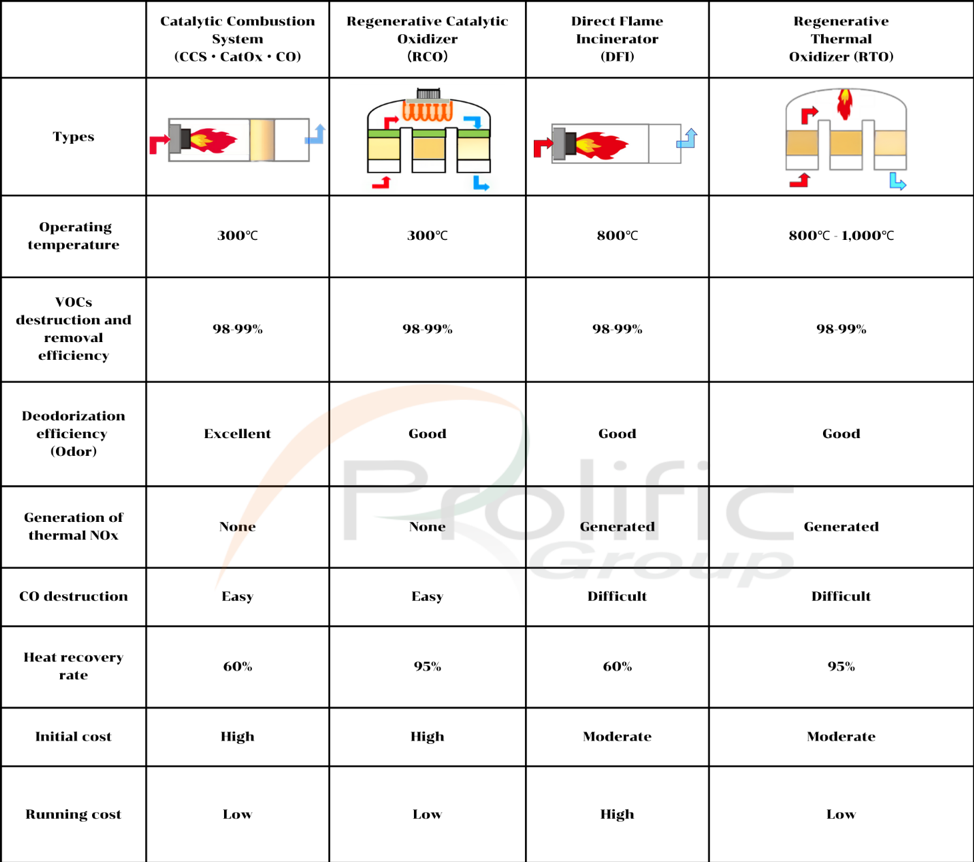
Currently, there are four main combustion methods used for treating Volatile Organic Compounds (VOCs). These methods include:
- Direct Flame Incinerator (DFI)
- Regenerative Thermal Oxidizer (RTO)
- Catalytic Combustion System (CCS, also known as CATox or CO)
- Regenerative Catalytic Oxidizer (RCO)
Among these methods, CCS and RCO, which utilize catalytic oxidation principles, offer several significant advantages. Notably, they can avoid the formation of thermal NOx and carbon monoxide (CO) gases, which are major air pollutants. Furthermore, these methods provide high efficiency in VOCs destruction and can effectively eliminate unpleasant odors.
Given these characteristics, catalytic combustion methods present an attractive option for VOCs treatment across various industries, especially in cases where stringent control of air pollution and odor is required.
Despite their appeal, it's crucial to consider that each factory has its own unique limitations. Therefore, to determine which system is most suitable for your specific needs, you can request a free consultation and inquire about the best options.
More Articles


