Si-SiC Radiant Tubes
“ Faster, Cheaper, Better ”
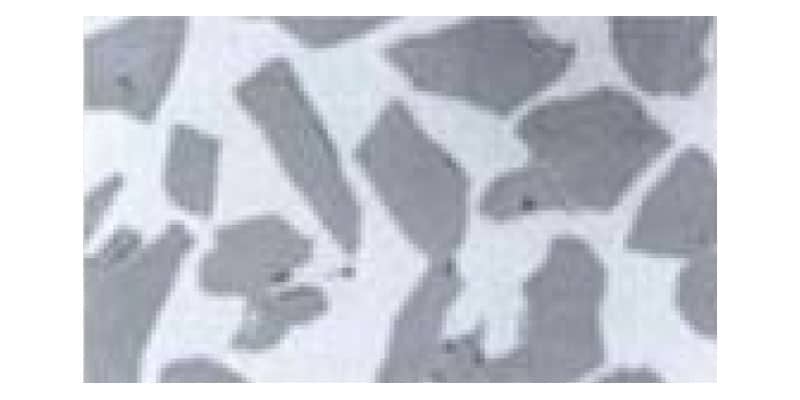
What is a Si-SiC Composite?
50% Si + 50% SiC by volume, metallurgical grade Silicon metal with 80 mesh SiC particles
Rationale for Si-SiC Radiant Tubes
- Conventional = Very Long Life
- Enabling = Very High Temp
- Productivity = Higher Throughput
Conventional Savings
- Excellent creep properties to 1343°C (2450°F) = No tube droop or distortion
- Excellent resistance to carburization = No tube corrosion or embrittlement
- Excellent thermal shock & low CTE = No fracture in heat-up or cool-down
18+ Years Continuous Carburizing Service
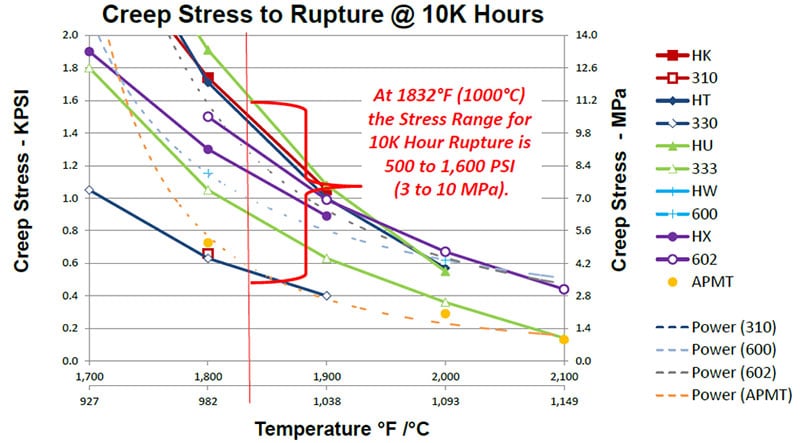
Compare Alloys to Si-SiC at 1343°C (2450°F) = ~8.5 KPSI Stress at <0.6% Strain
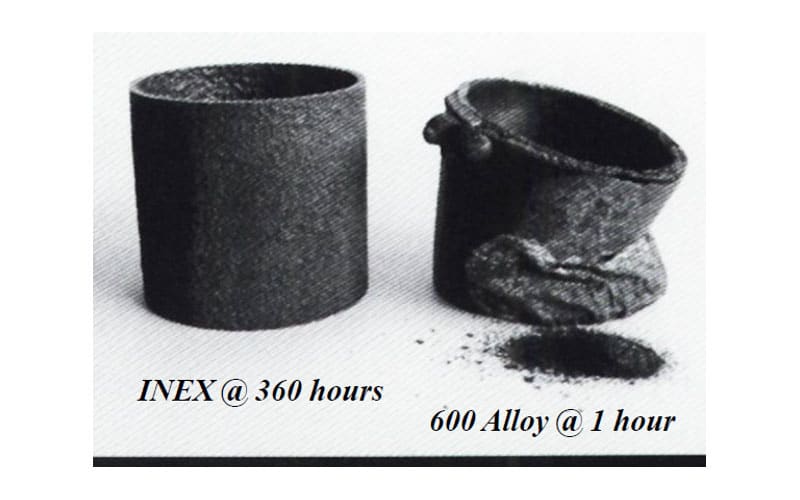
Si-SiC Composite vs. 600 Alloy (after just 1 hour)
No deformation for the INEX tube tested 360 hours at 1343°C (2450°F).
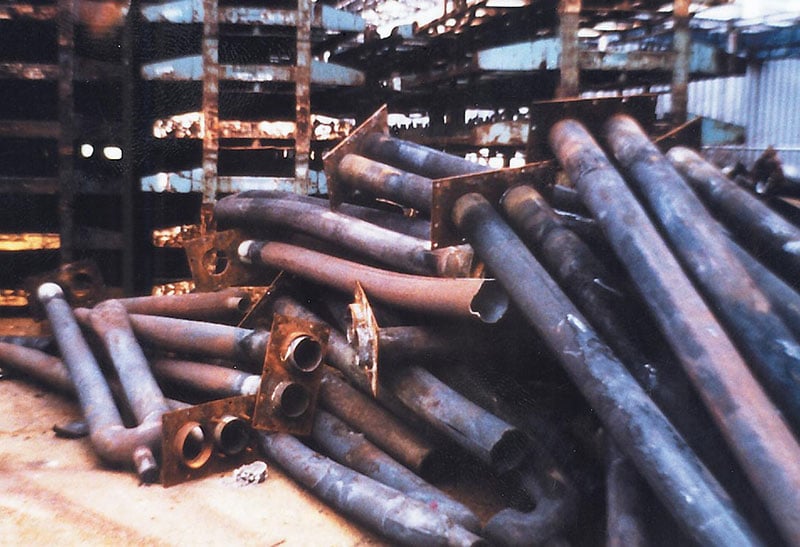
Metal Alloy Tubes after < 24 Months
Si-SiC Enables Processing > 982°C (1800°F)
- Stainless Steel Aging
- Powdered Metal Sintering
- Minerals Processing
What Limits Furnace Throughput ?
- Metallurgical objectives
- Mechanical constraints
- Radiant tube heat flux
- NOT refractory or burners
What is Heat Flux ?
Heat flux or thermal flux is the rate of heat energy transfer through a given surface,
per unit surface.
(BTU/hour)/inch2
kW/meter2 = 2.2 BTU/hr/in2
Design Criteria for Radiant Tubes
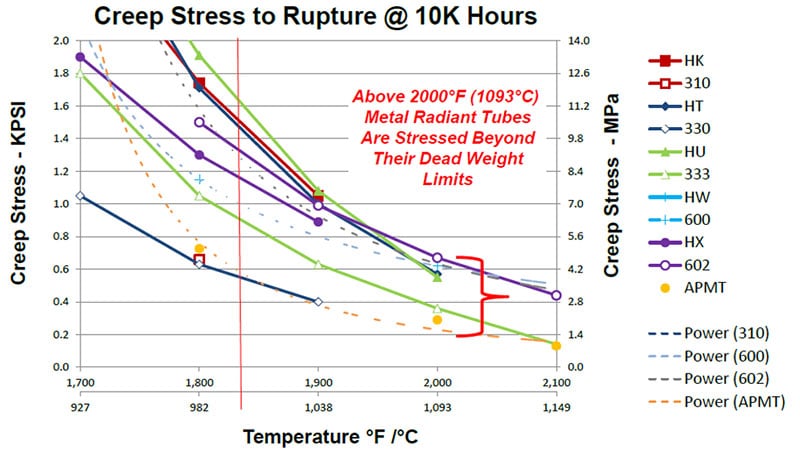
Metal Alloy Tubes at 982°C (1800°F) :
- Conservative = 50 BTU/hr/in2
- Nominal = 55 BTU/hr/in2
- Aggressive = 60 BTU/hr/in2
Max Service temperature depends on Alloy & Atmosphere
Si-SiC Composite Tubes @ 982°C (1800°F) :
Nominal = 110 BTU/hr/in2
Maximum Service Temp is 1343°C (2450°F)
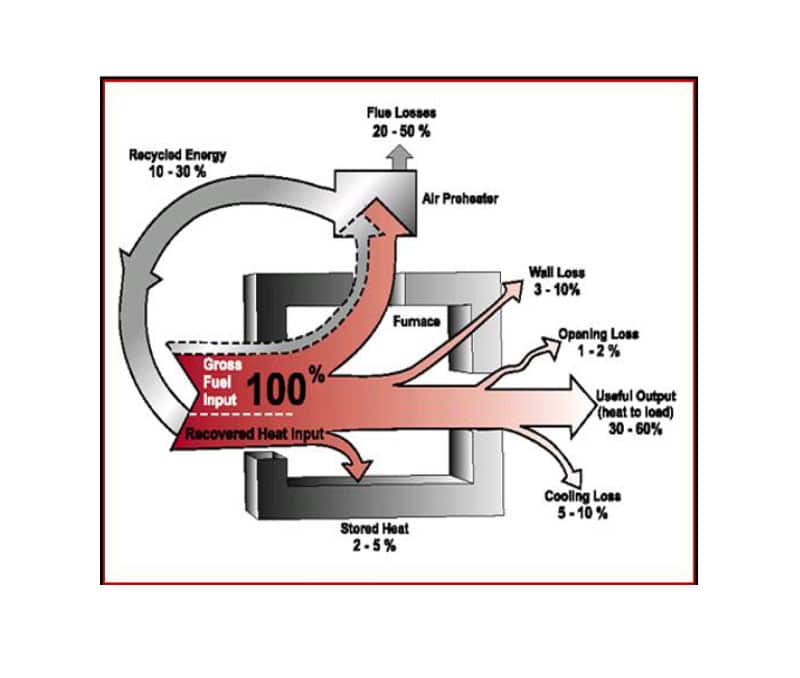
Parasitic or Standing Losses average ~20%
- Wall Losses
- Opening Losses
- Cooling & Conveyor Losses
- Fixtures, Trays, Baskets
- Storage Losses (Batch Furnace)
FASTER Cycle Time
- Increases furnace throughput
- Reduces per unit standing (parasitic) losses
- Does NOT reduce process energy required
- Does NOT improve combustion efficiency
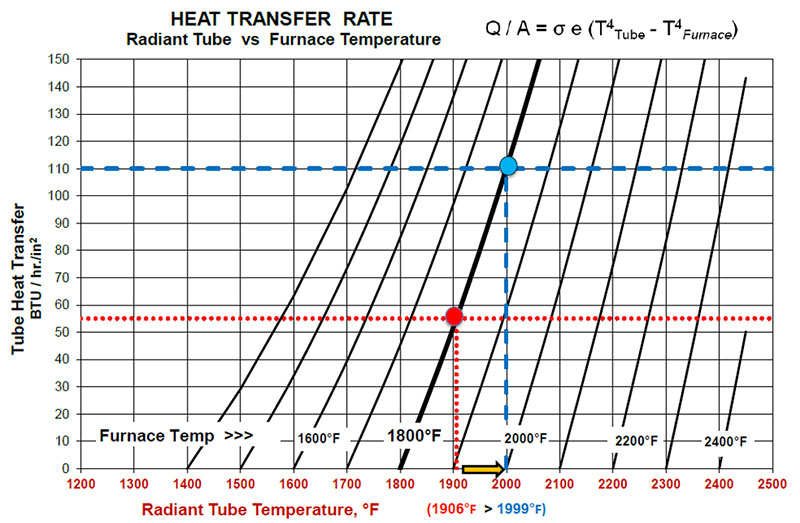
Compare Alloys to Si-SiC at 1343°C (2450°F) = ~8.5 KPSI Stress @ <0.6% Strain
CHEAPER Furnace Operation
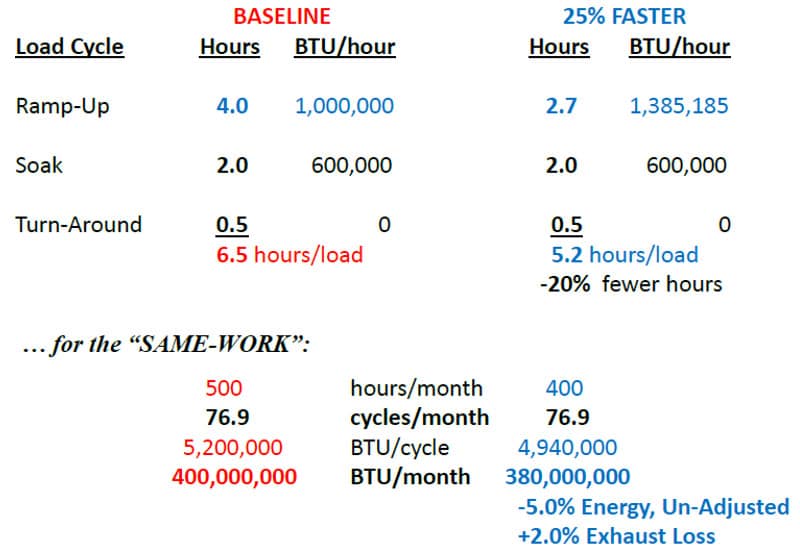
- 25% Increase in Throughput = 25% More Load (Reducing Furnace Operating Hours by 20%)
- Process Energy Required Remains the Same i.e. Work on Load is Unchanged = 0.0
- Standing Energy Losses of 20% Eliminated for the 20% of Furnace Hours Reduced = +4.0%
- Offset Somewhat by Higher Exhaust Losses (1906°F > 1999°F) Available Heat = -2.0%
“SAME-WORK” SCENARIO
“Back of the Envelope” Savings
1200 more hours/year/furnace
5.2 hours/cycle
231 cycles/year
2,000 lbs/cycle
461,538 lbs/year
$1.10 Sales Value / lb
$507,692 Increased Sales
50% Variable Cost
$253,846 EBIT / furnace
Compare with:
- New Si-SiC Radiant Tubes <$25,000
- New EGR-type Burners, if Needed <$25,000
- Used or New Furnace
Why Are Si-SiC Tubes BETTER ?
- Proven Life >18 Years in Carburizing
- High Temp Processing to 2300°F
- 25% More Product Throughput
- < 12 Months Payback
FASTER, CHEAPER, BETTER @ 1400°F - 2300°F

More Articles