
VOCs, Odor & CO Control
High-performance oxidation technology for VOCs, Odor and CO control, compact, efficient and engineered for long-term operation.
RTO • RCO • Catalytic Oxidizer
Get Advice
The challenge
Different Problems Require Different Approaches
Understanding the source is the first step toward selecting the right treatment approach.
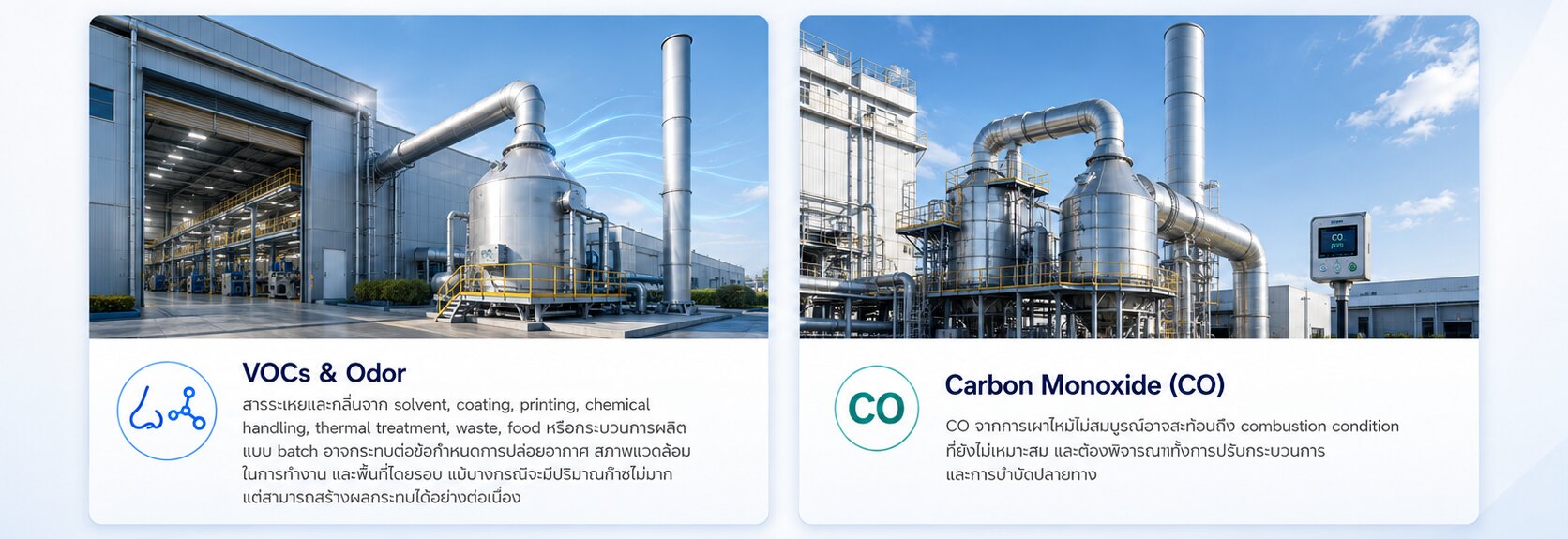
Understanding the challenge
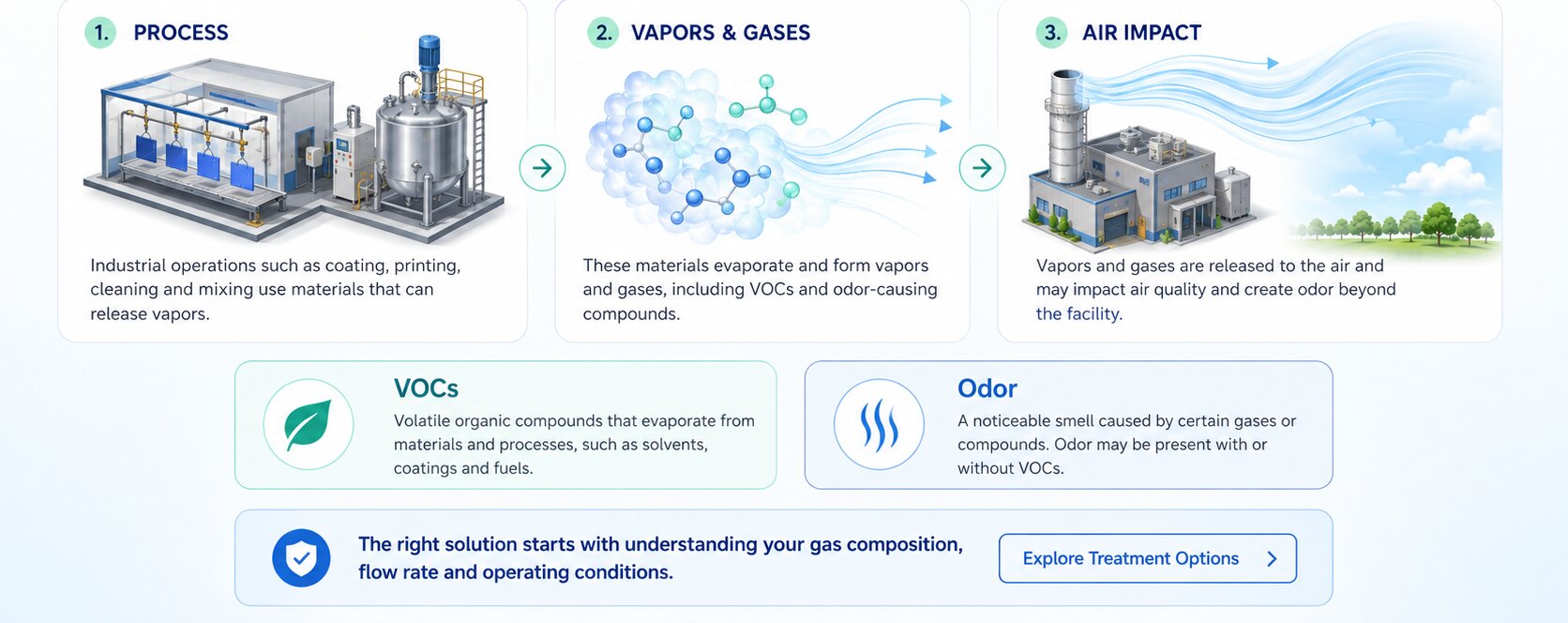
What Are VOCs & Industrial Odor?
Many industrial processes release vapors and gases. Some are VOCs, some create odor, and some are both. Understanding the source is the first step toward effective treatment.
Compliance is not the whole story
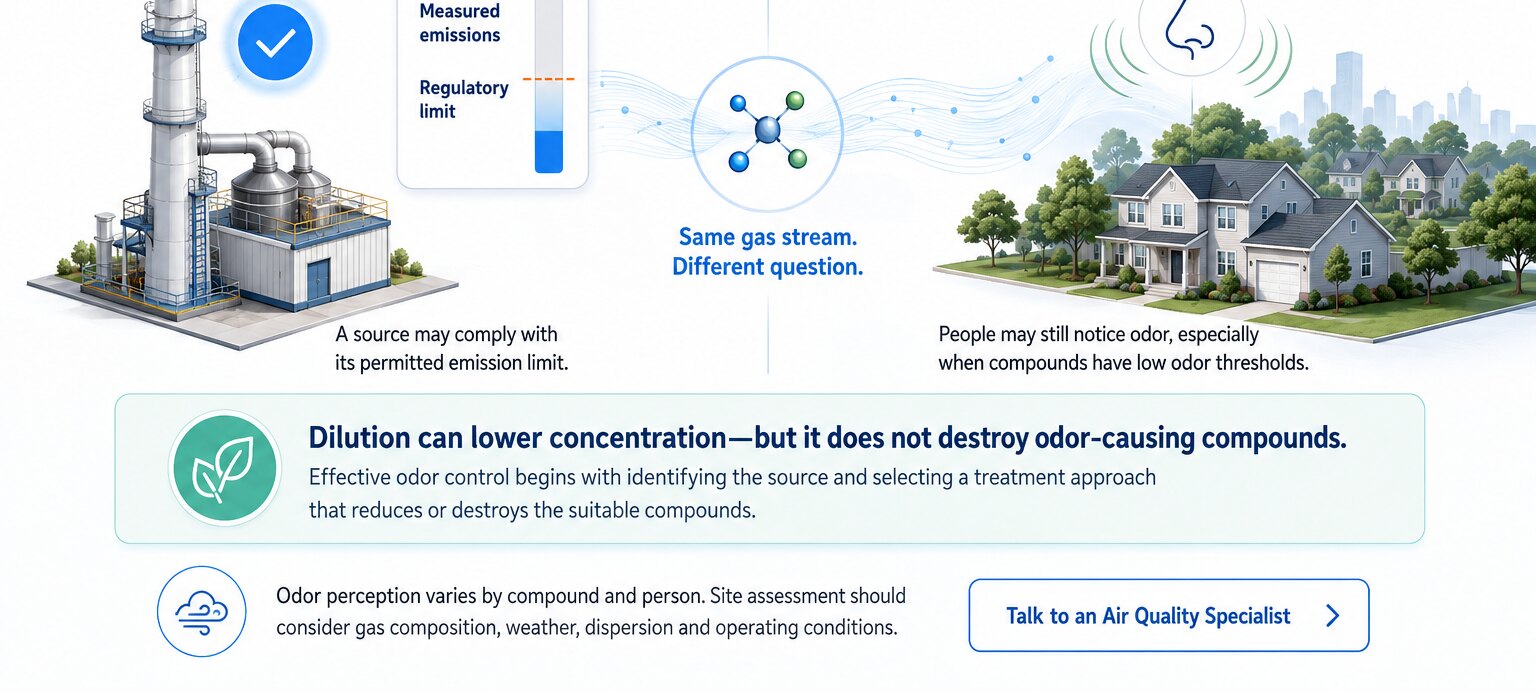
Meeting the Limit Does Not Always Mean Odor-Free.
Emission limits and human odor perception are measured differently, and odor can be noticed at very low concentrations.
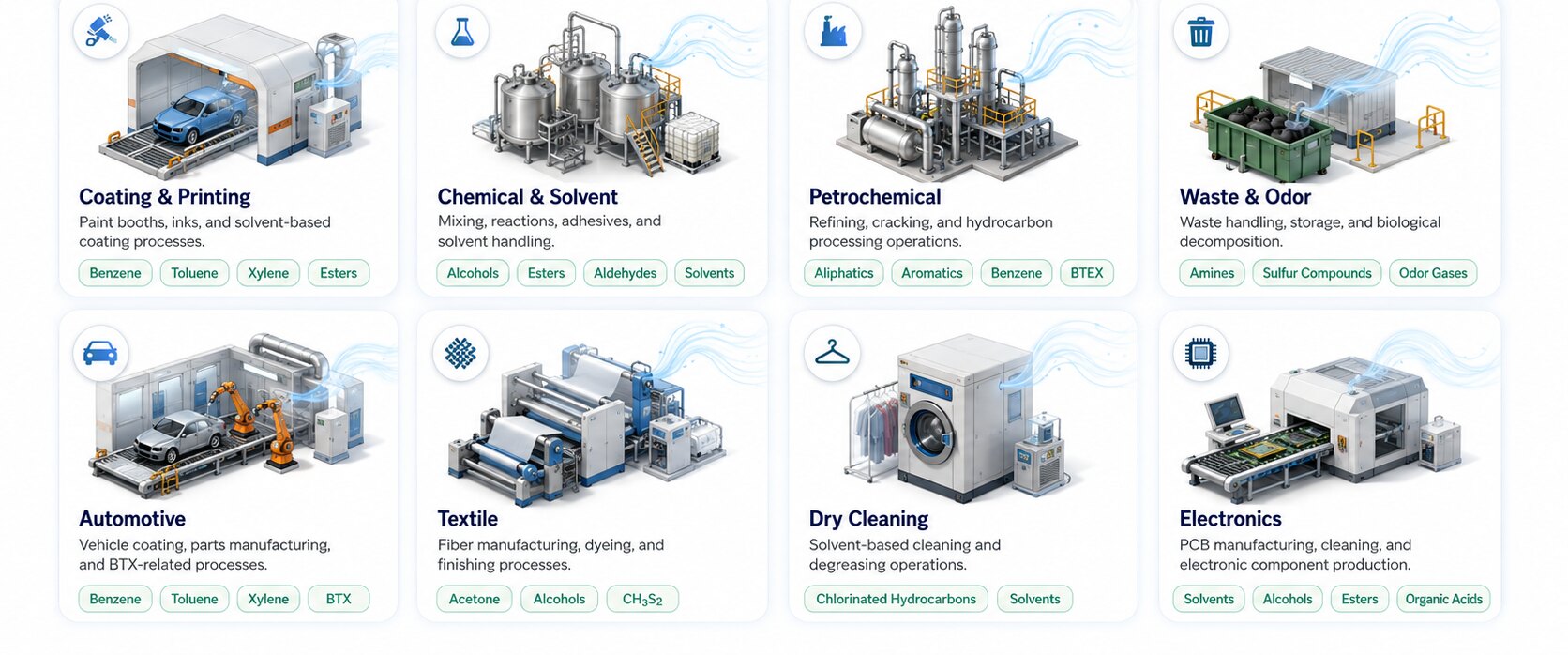
Where Do VOCs Come From?
Common industrial sources and the vapors they may release.
Technology comparison
Compare VOCs & Odor Treatment Technologies
Each technology has a suitable operating window. The best choice depends on your gas stream and site requirements.
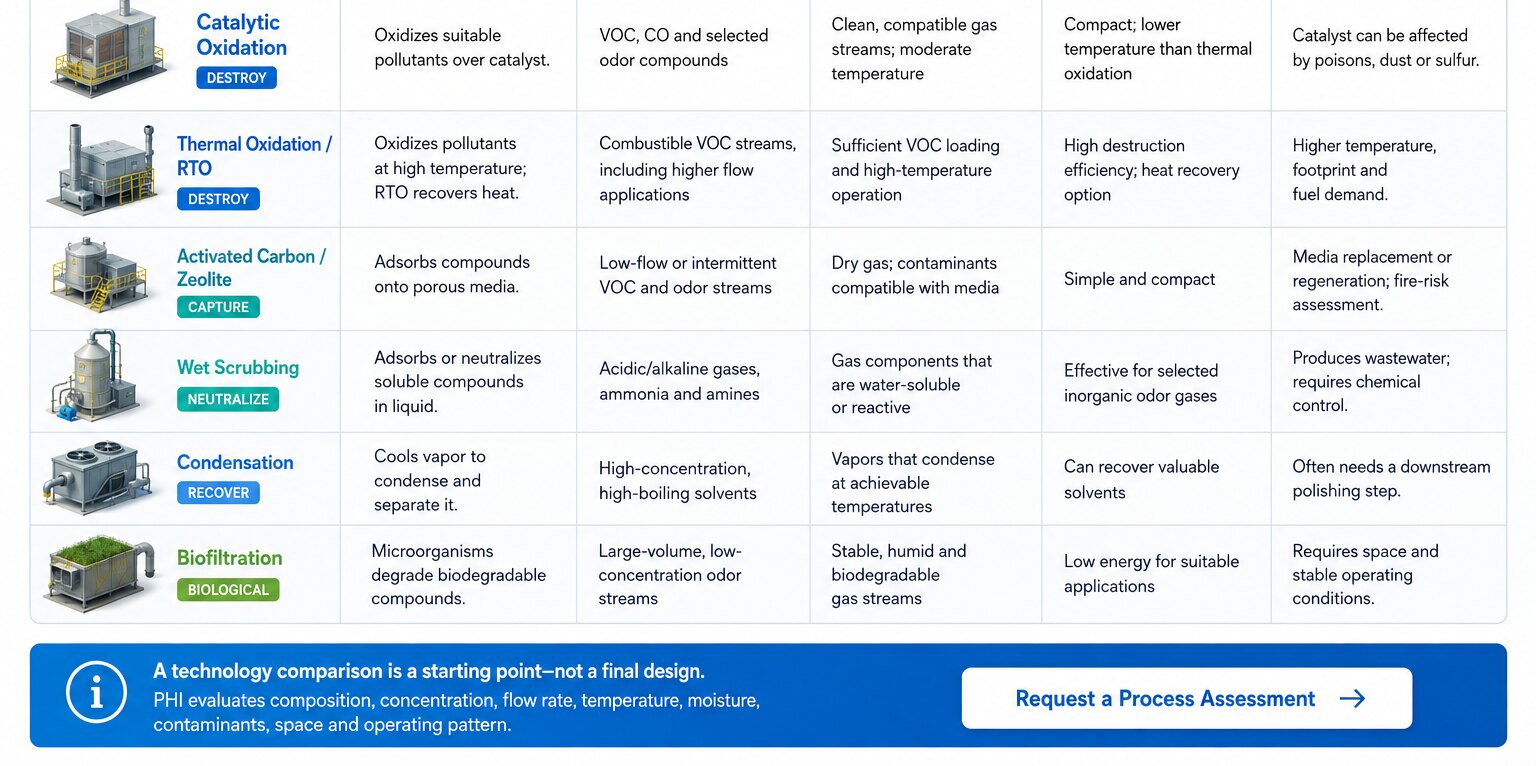
Today, a range of technologies is available to manage VOCs, nuisance odors and carbon monoxide (CO). These include activated carbon adsorption, cold plasma, wet scrubbers and biological treatment systems such as biofilters.
However, each technology has its own limitations. Adsorption media may become saturated and require frequent replacement; wet scrubbers can generate wastewater; and performance may vary when pollutant concentrations fluctuate. In some cases, pollutants may not be fully eliminated, allowing residual odors to reach surrounding communities.
For suitable applications, oxidation is widely recognized as a highly effective approach because it is designed to destroy pollutants at their source, rather than simply capture or transfer them
Customer challenges
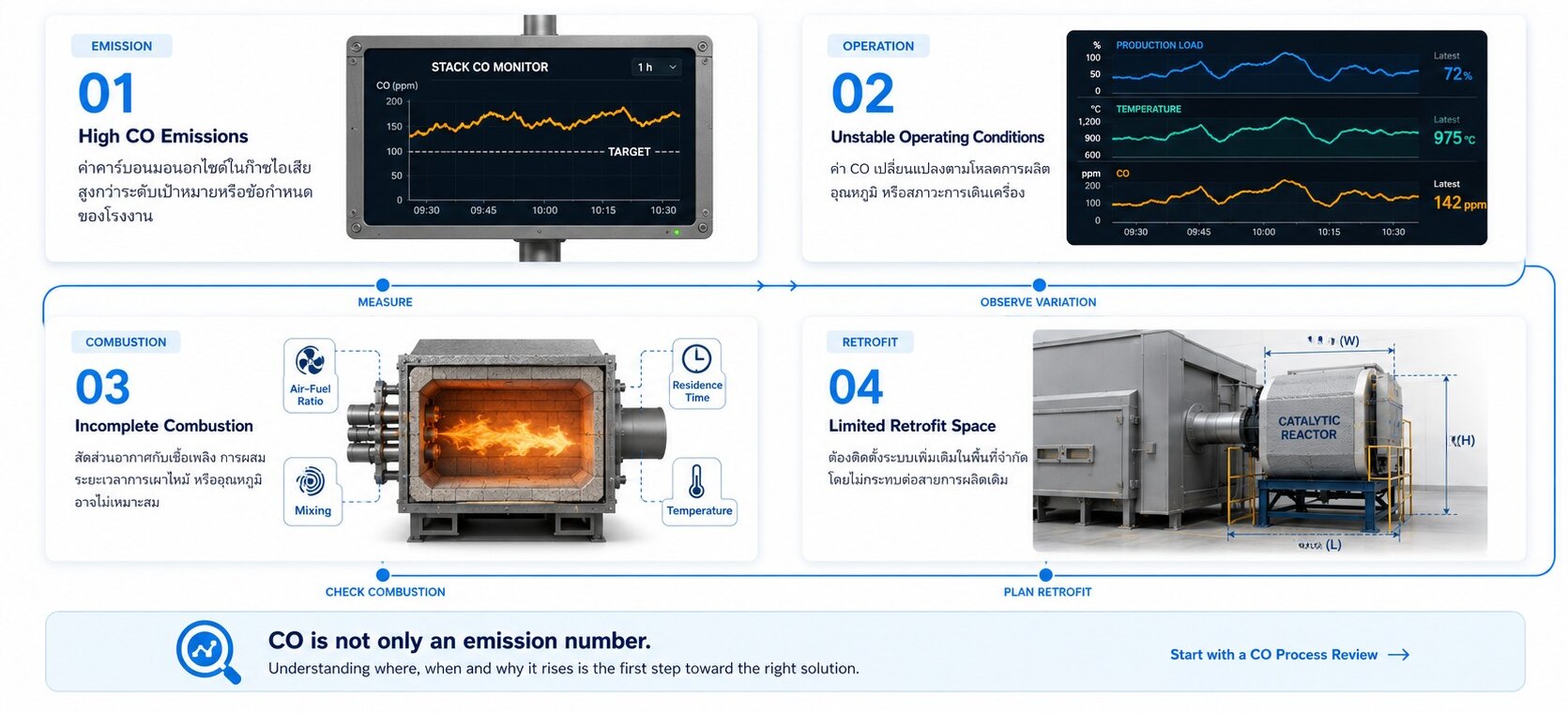
When CO Becomes a Process Challenge
The limit this is measured against
For a process that burns fuel, the problem shows up directly in the emission figures. The general standard set by the Ministry of Industry notification of B.E. 2549 on permissible quantities of contaminants in air discharged from factories puts carbon monoxide at no more than 690 ppm, under the reference conditions the regulation specifies.
Common sources & applications
Where Can CO Be Found?
CO control systems can be applied across a wide range of combustion and process-related sources.
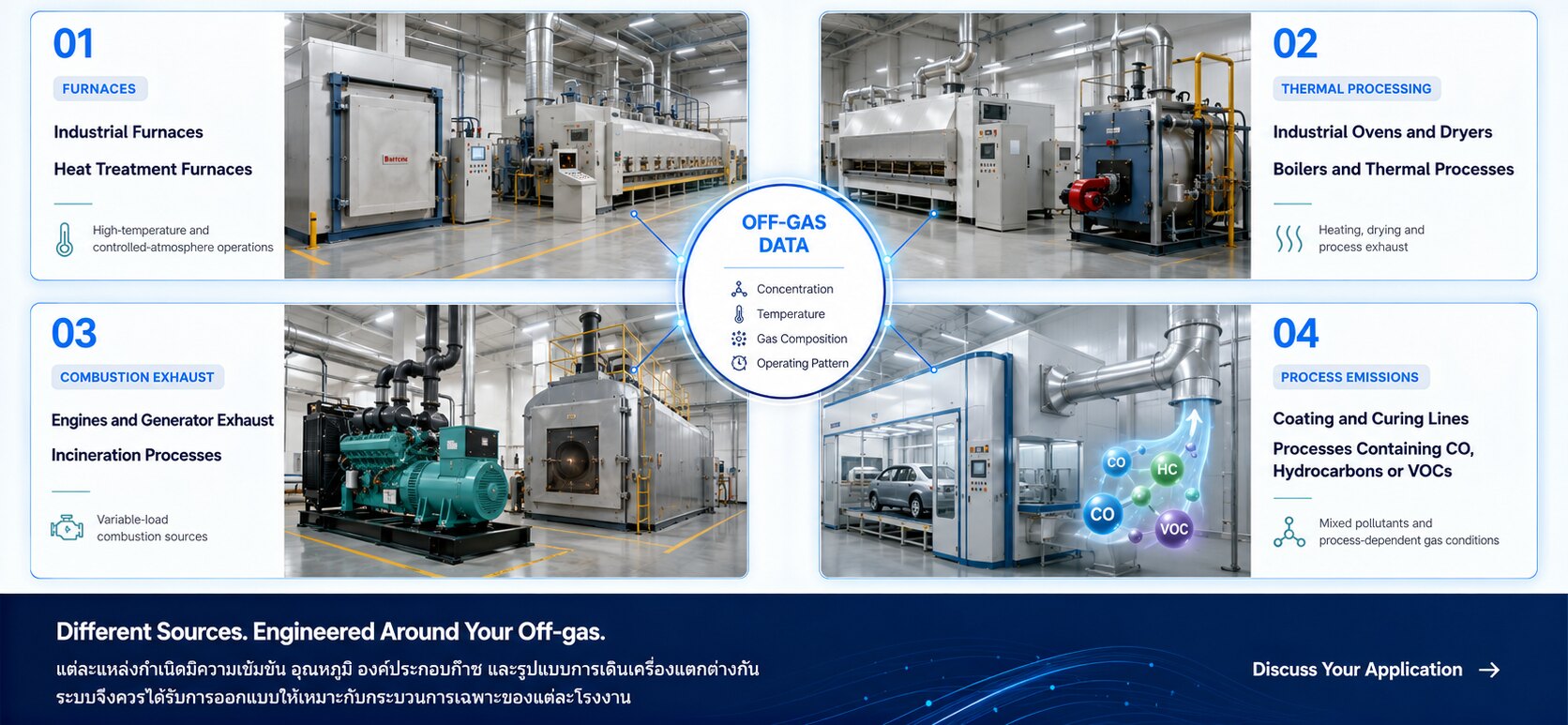
From Industrial Heat to Cleaner Air
Our experience with industrial furnaces, heat systems and combustion tells us that controlling CO is not a matter of the equipment at the end of the line alone. It depends on understanding how process, temperature, airflow and oxidation act on each other.
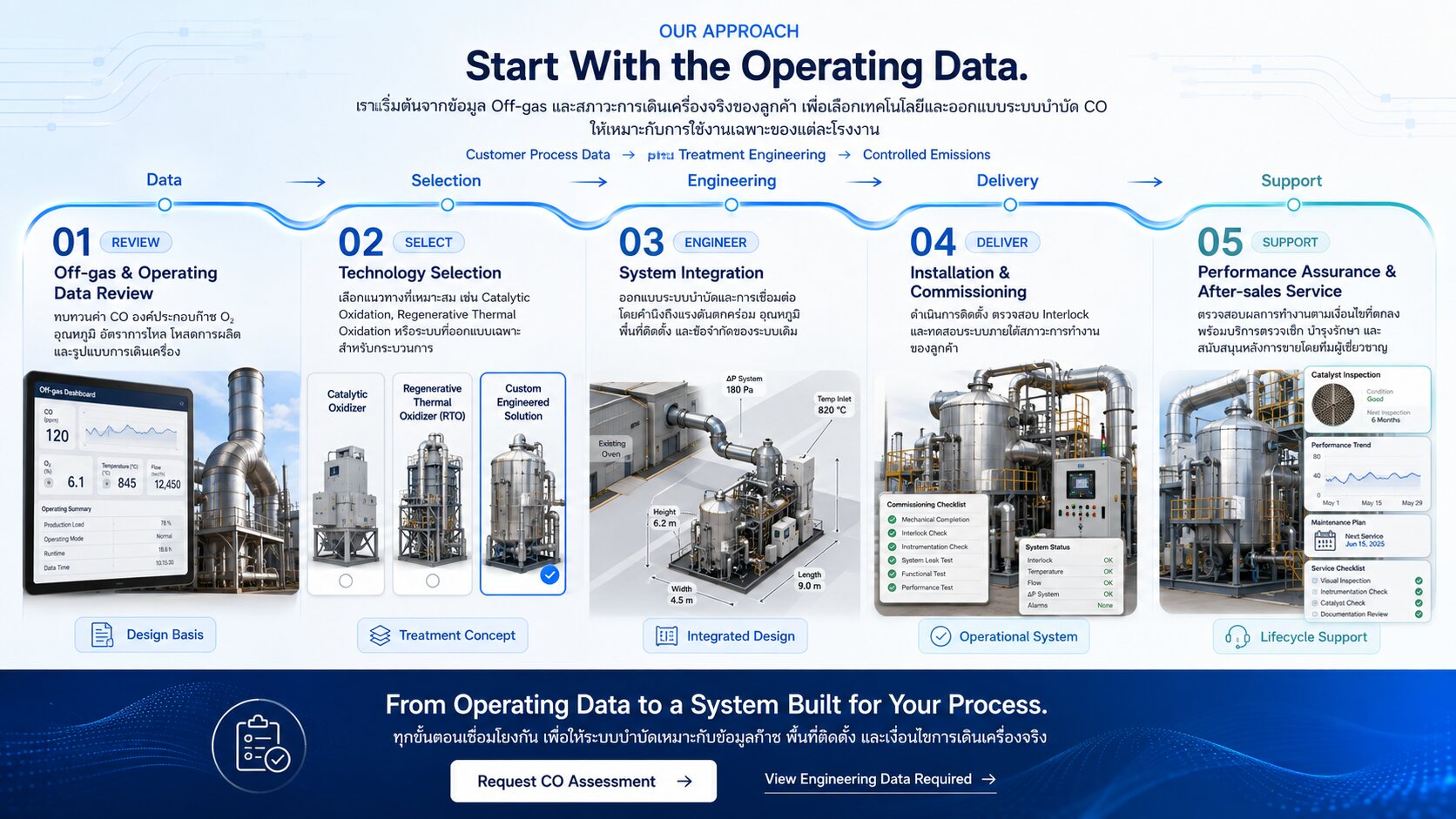
Catalytic oxidation technology
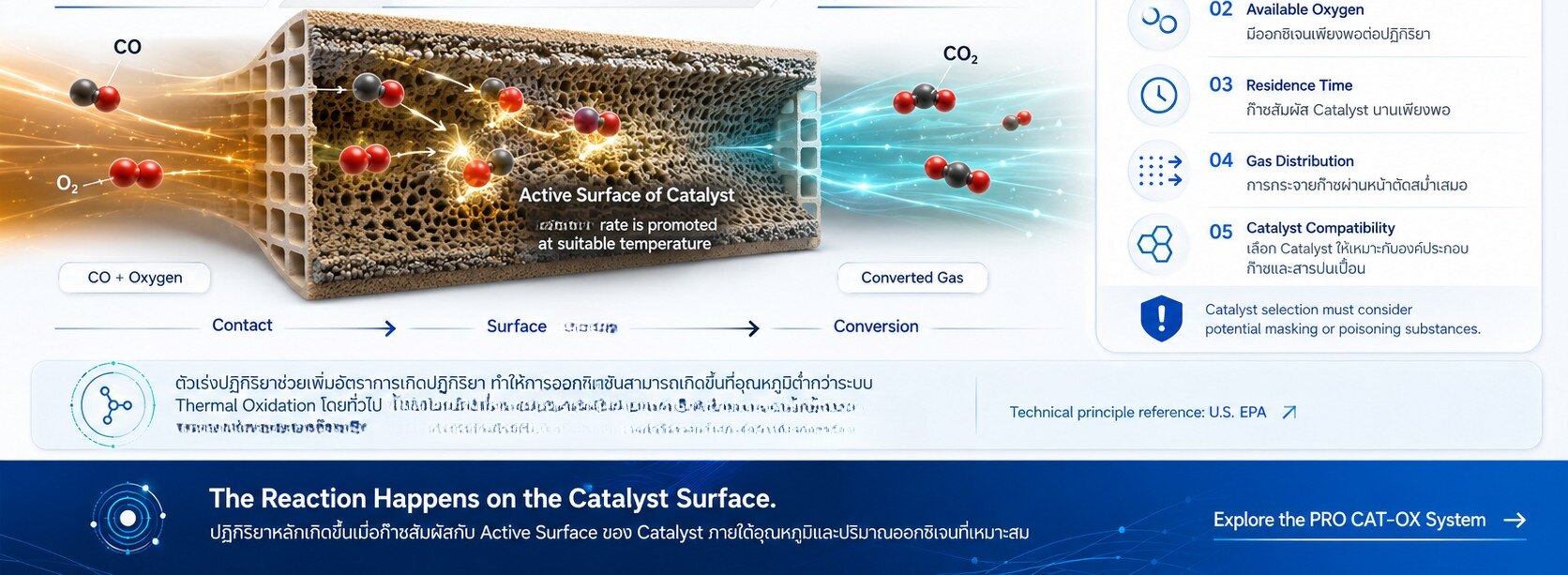
Convert CO Through Catalytic Oxidation
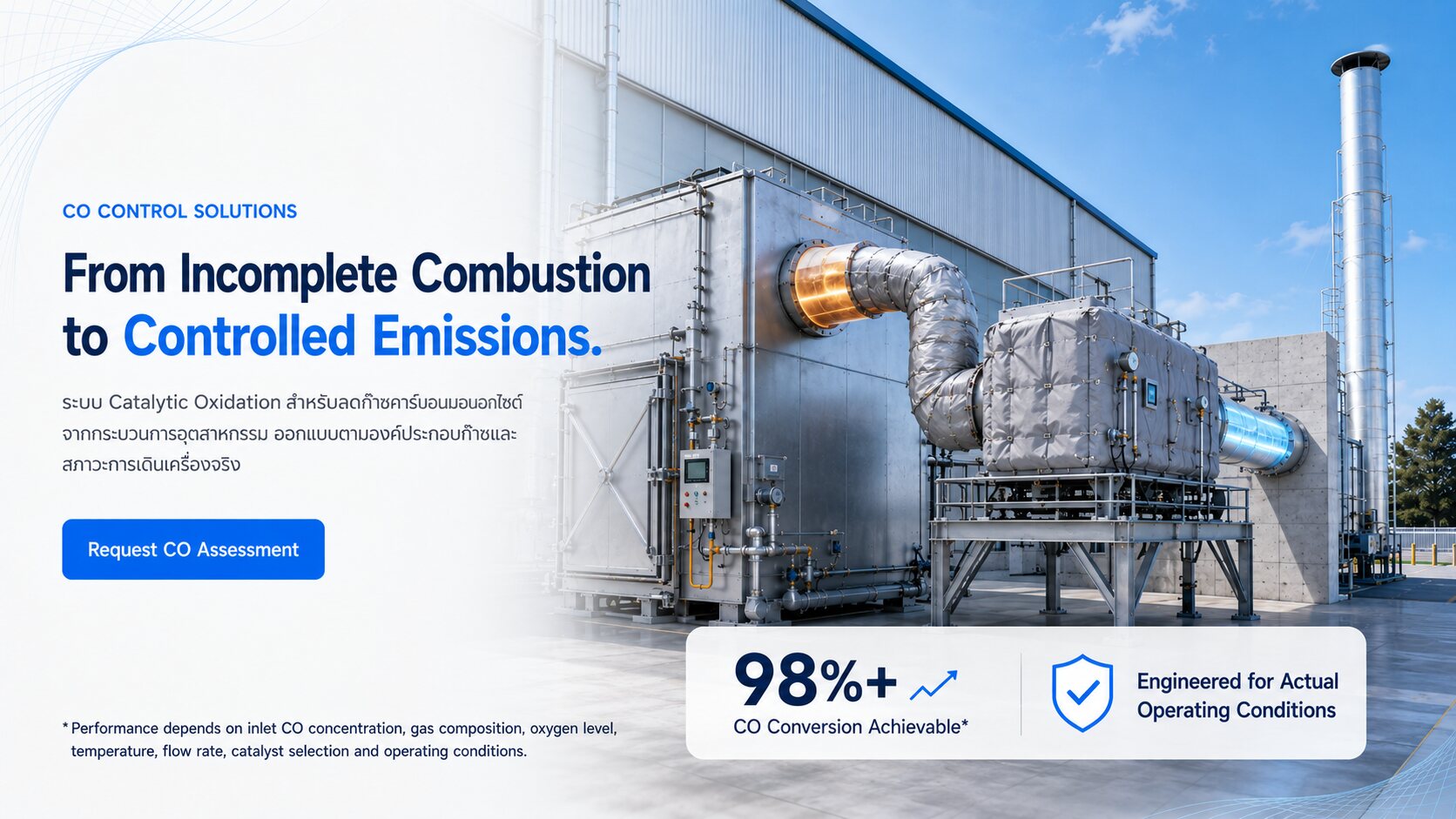
The catalyst raises the rate of reaction, so CO converts to CO₂ efficiently at a lower temperature than a conventional thermal oxidiser needs. What it asks for in return is the right combination of temperature, oxygen level and contact time.
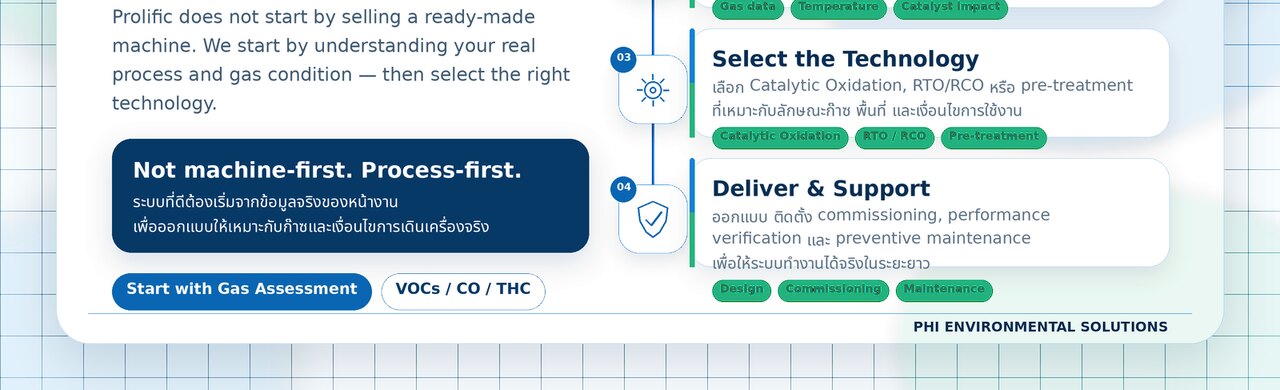
Built Around Your Process
Engineering Before Equipment
- Understand the Source
- Review the Gas
VOC / CO / THC, flow, temperature, oxygen, moisture, dust - Select the Technology
catalytic oxidation, RTO/RCO or pre-treatment - Deliver & Support
commissioning, performance verification, preventive maintenance
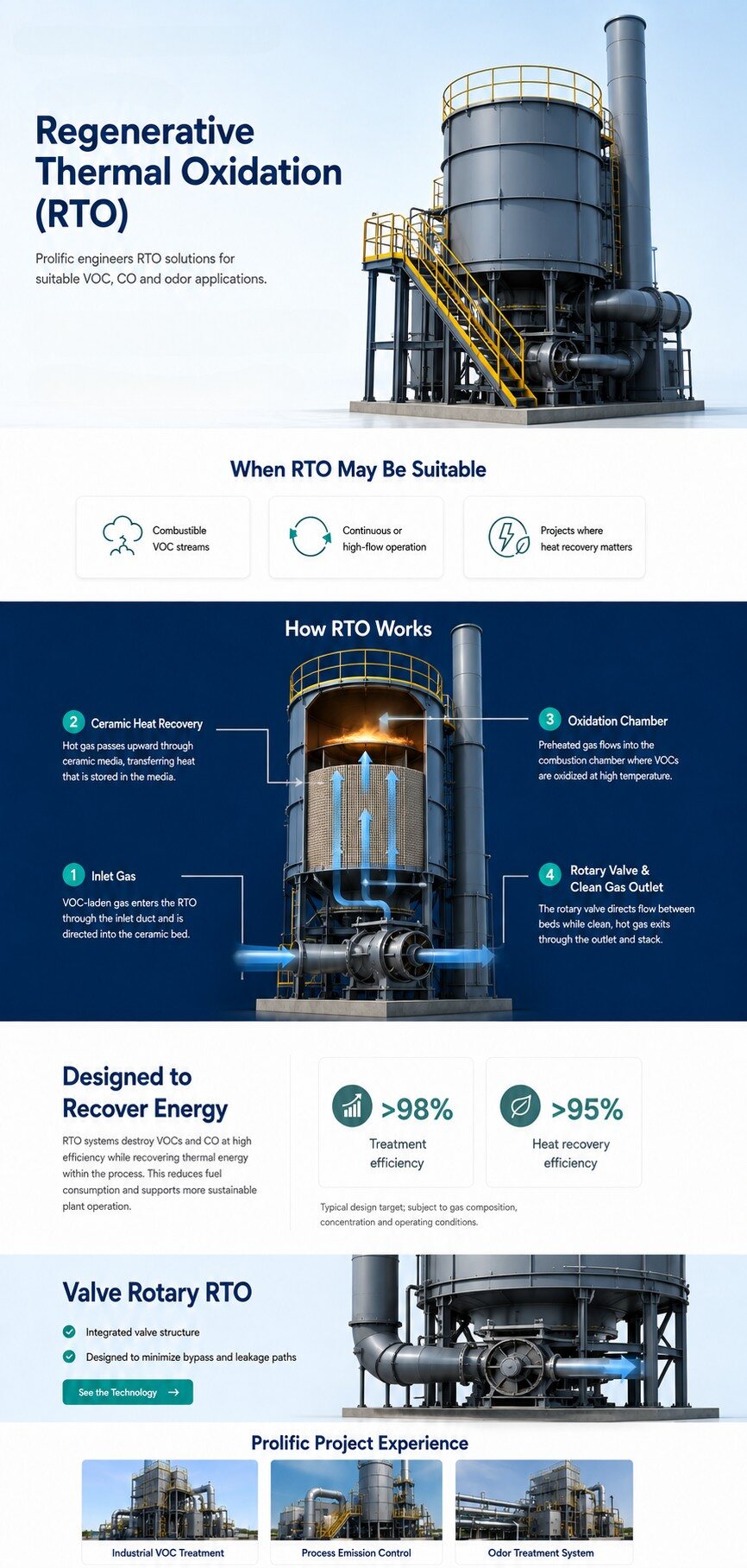
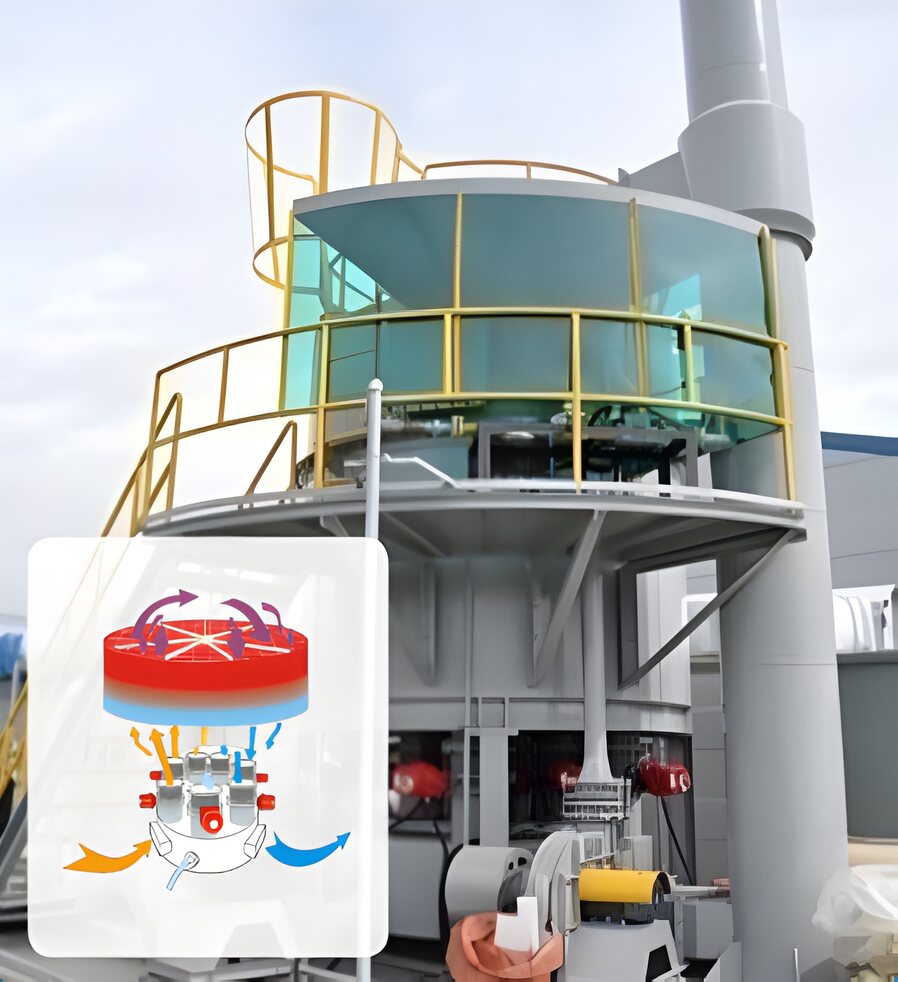
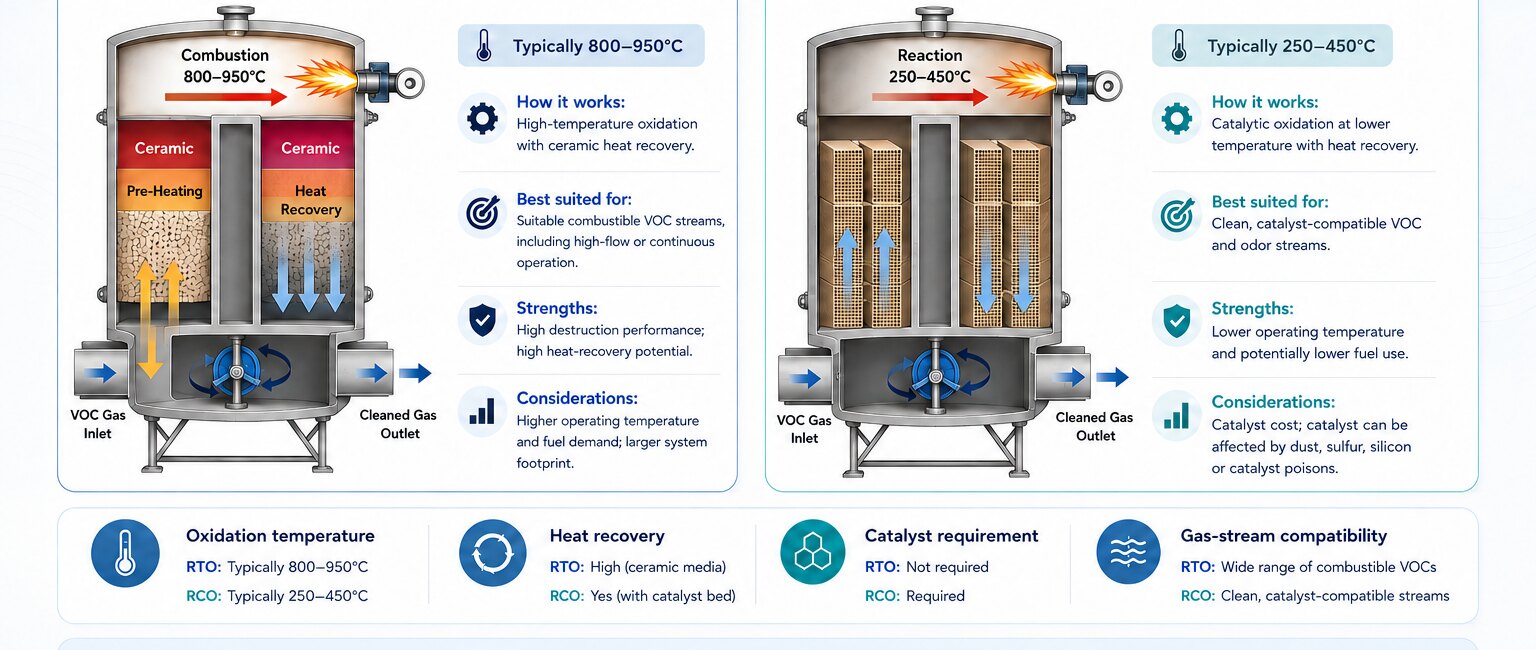
Regenerative Thermal Oxidation (RTO) is a technology designed to treat volatile organic compounds (VOCs), carbon monoxide (CO), nuisance odors and hazardous air pollutants (HAPs). It uses high-temperature oxidation, typically around 800–950°C, to break down suitable organic pollutants, achieving treatment efficiencies of up to 98–99% under appropriate design and operating conditions.
The system combines this process with high-efficiency ceramic heat-recovery media, which can recover more than 95% of the thermal energy for reuse. This helps minimize heat loss and reduce fuel consumption. For suitable applications, RTO provides a robust solution that combines high pollutant-destruction performance with energy-efficient operation.
The Evolution of Regenerative Thermal Oxidizers (RTOs)
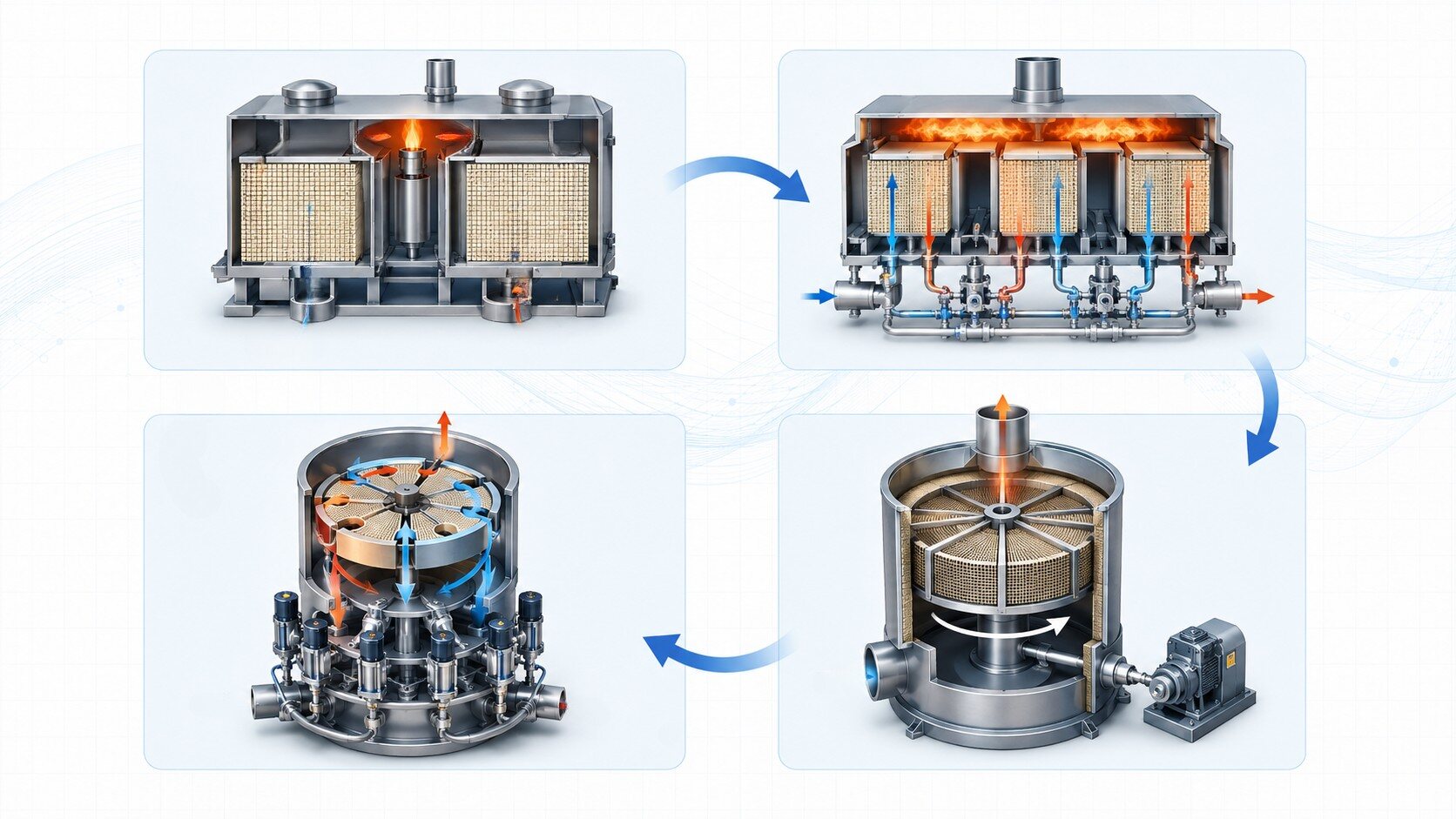
How It Works
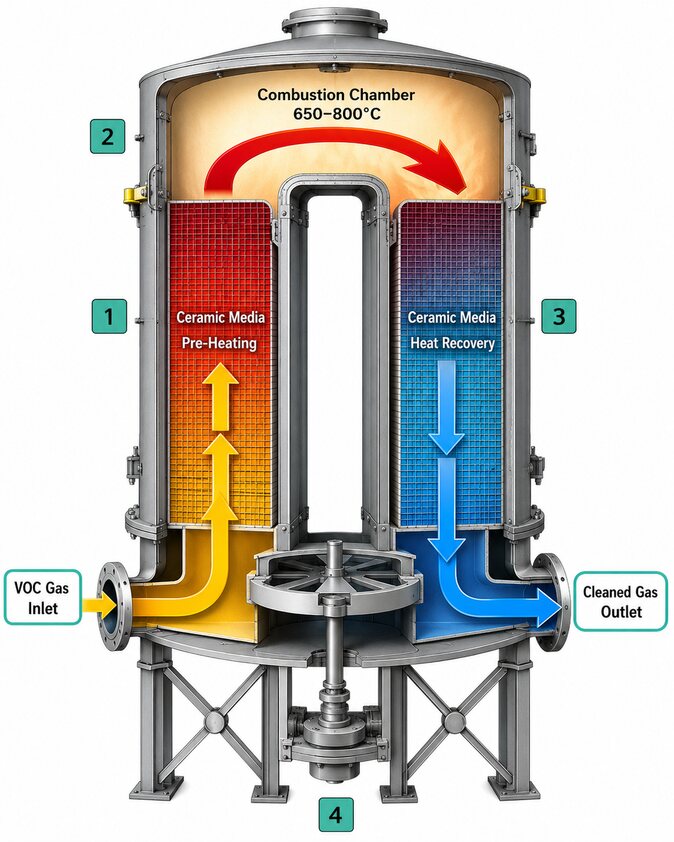
- Preheating: Waste gas containing VOCs and odors is directed through a pre-heated Ceramic Layer. This process effectively raises the gas temperature, bringing it close to the combustion point.
- Oxidation: Upon entering the Combustion chamber, the VOCs and odors undergo complete Oxidative Decomposition. This chemical reaction fully breaks down the pollutants into non-toxic gases.
- Heat Recovery: The treated, clean air flows through the outlet ceramic layer to transfer and store thermal energy within the media (to heat the incoming air for the next cycle). Finally, it is released into the atmosphere as Harmless & Clean Gas, free from both color and odor.
- Cycle Operation: The system operates by continuously switching the airflow direction (Cycle) between the heat storage and heat release zones to ensure maximum energy efficiency is achieved.
The New Generation Valve System: Eliminating Weaknesses Leakage
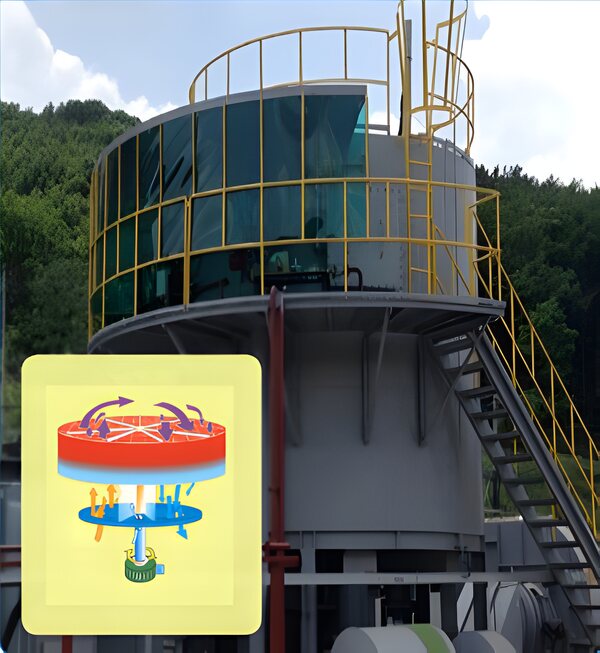
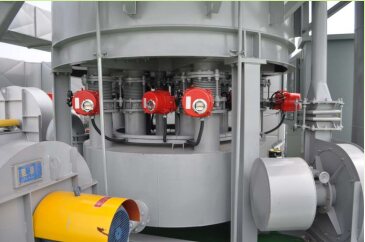
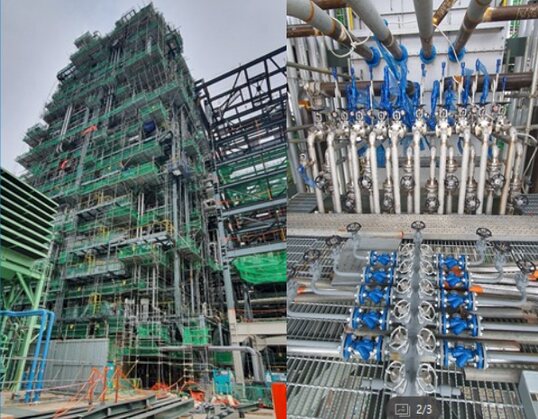
We have overcome the limitations of conventional Rotary RTOs, which frequently suffer from Gas Leaks due to seal deterioration and thermal distortion of the rotating structure. We have advanced to 'Valve Type' technology, replacing the air switching mechanism with a high-precision valve system, reinforced by a far more durable Integrated Structure."
RTO Performance Guarantee
Reference
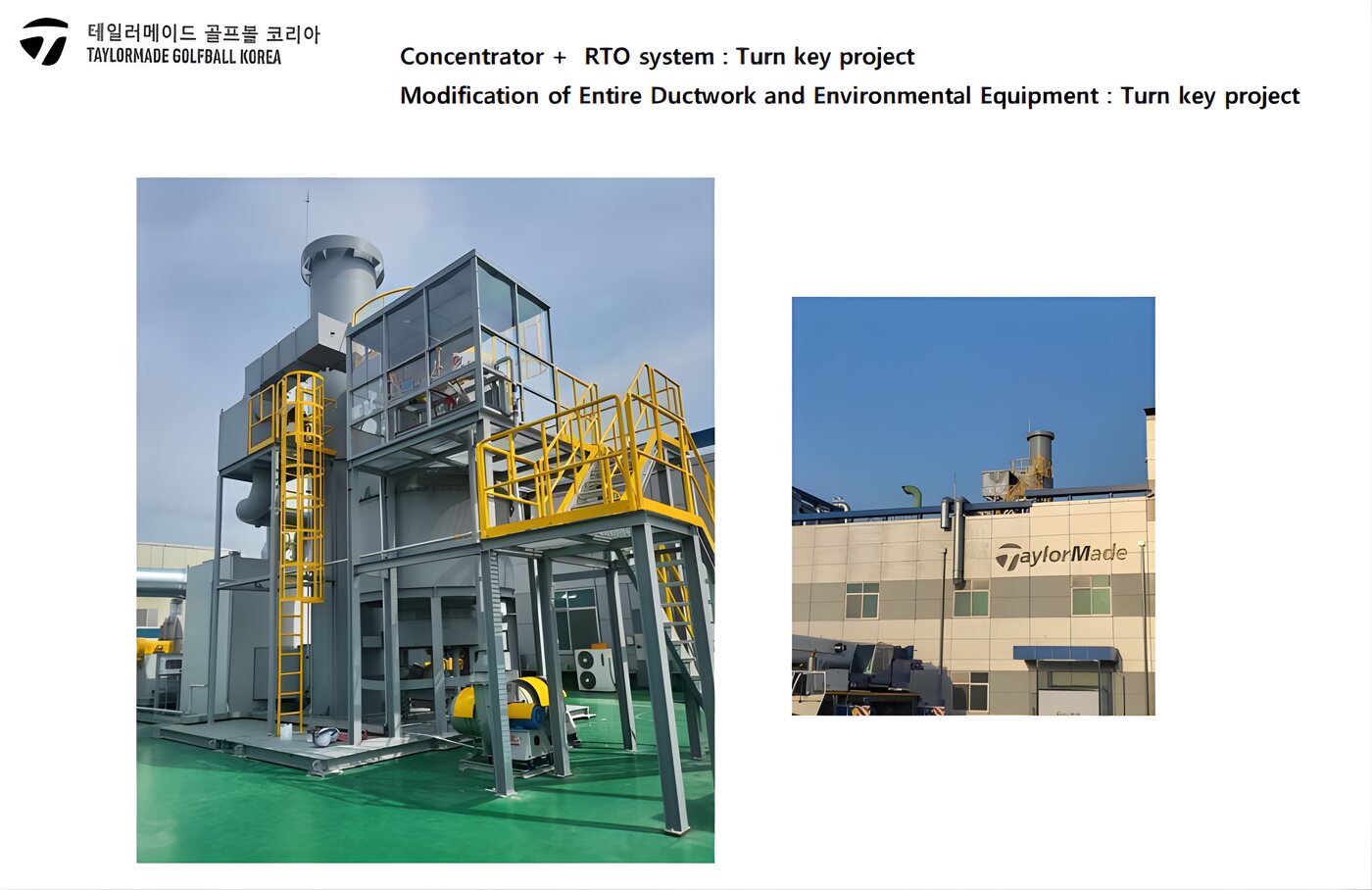
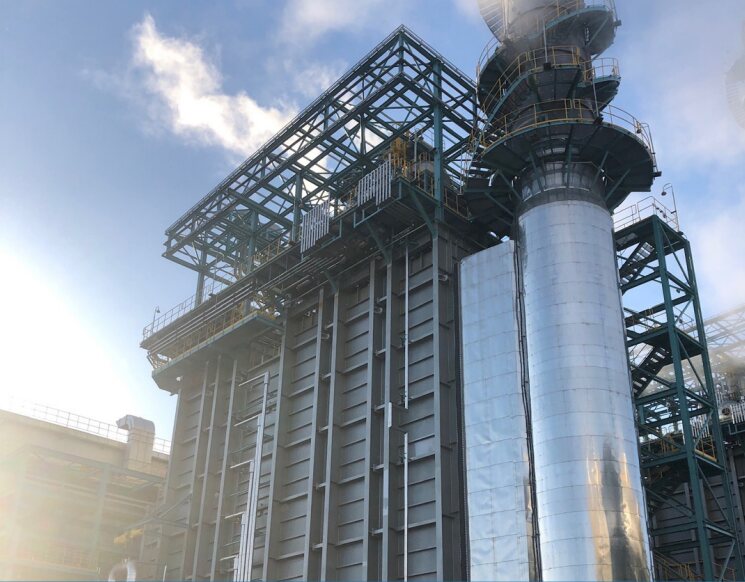
TaylorMade Golf
Project : CRTO Turn Key Project Turn key
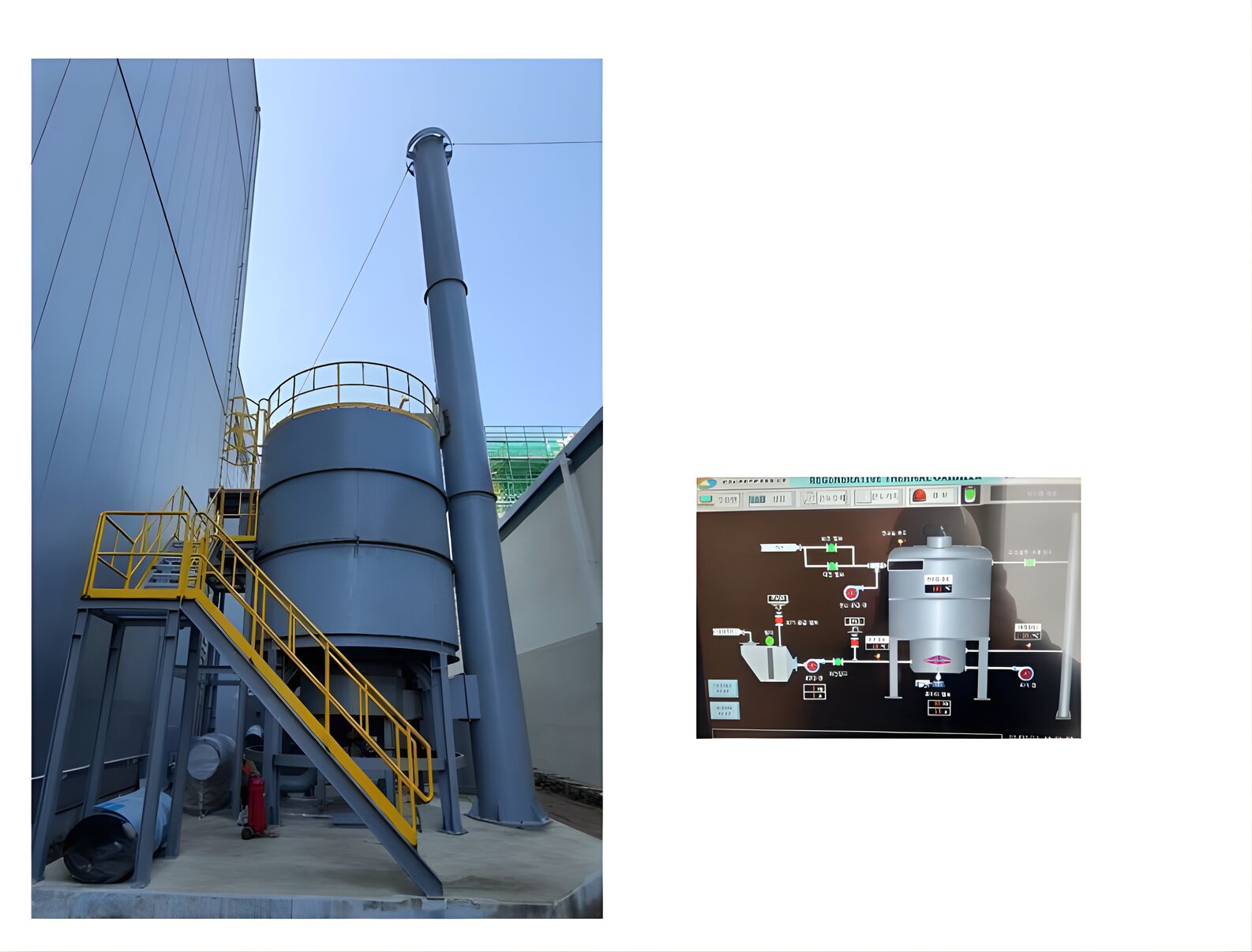
Daehwa Pharmaceuticals
RTO System Plant 1 - Specialty Industry
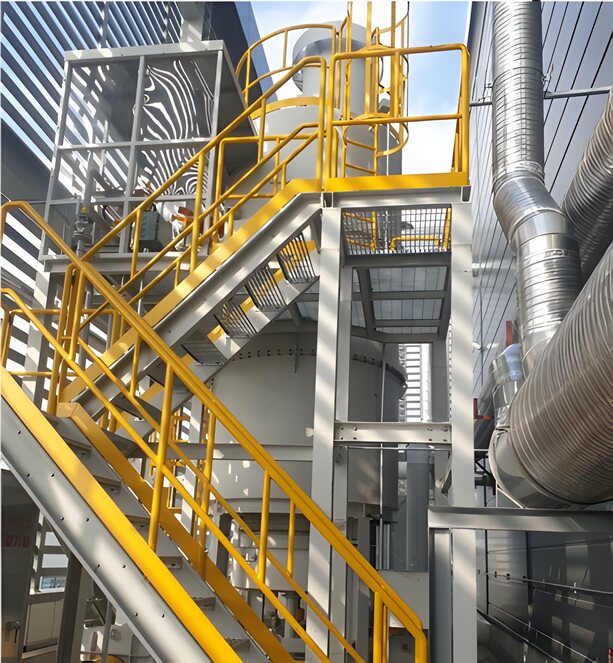
JL Chem
Project : Concentrator + RTO System
Regenerative Catalytic Oxidizer (RCO)
RTO or RCO?
Both use oxidation to treat suitable VOCs and odor-causing compounds. The right choice depends on your gas stream and operating conditions.
VOCs Abatement Technologies
Pro-CatOx (Catalytic Oxidizer)
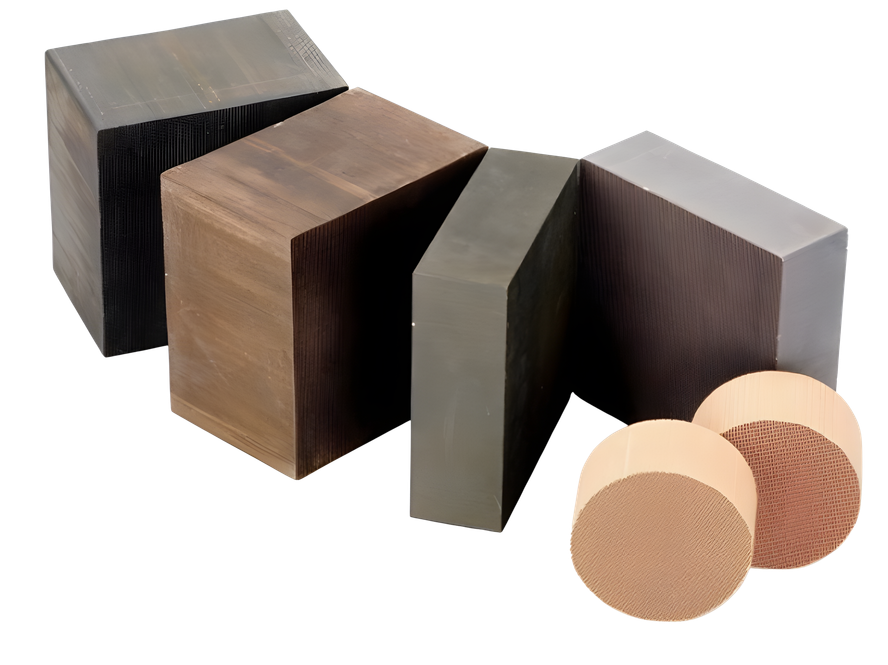
Pro-CatOx is an advanced air pollution control system that removes volatile organic compounds (VOCs), carbon monoxide (CO), and bad odors. It uses a catalyst to turn these pollutants into CO₂ and water vapor (H₂O) at much lower temperatures.
Unlike thermal incineration systems that may need temperatures up to 800°C, Pro-CatOx works at only 200–400°C. The catalyst helps the reaction happen more easily, so pollutants can be destroyed fully without extreme heat.
Principle of the Pro-CatOx
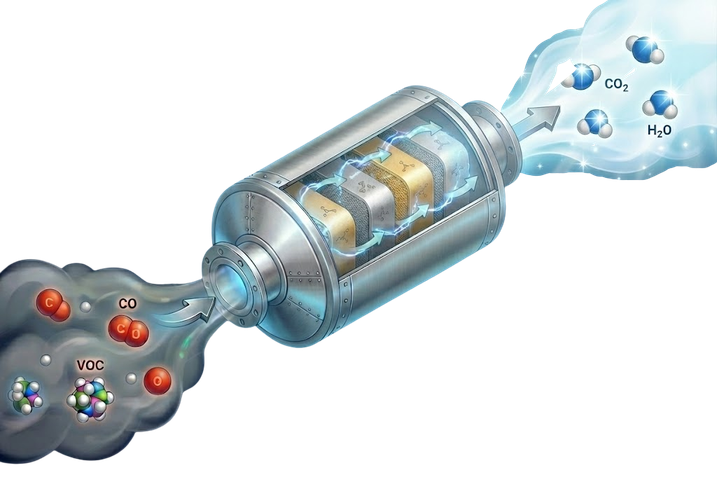
VOCs + O₂ → H₂O + 2CO₂
2H₂ + O₂ → 2H₂O
CO + H₂O → CO₂ + H₂
VOCs + H₂O → CO + CO₂ + H₂
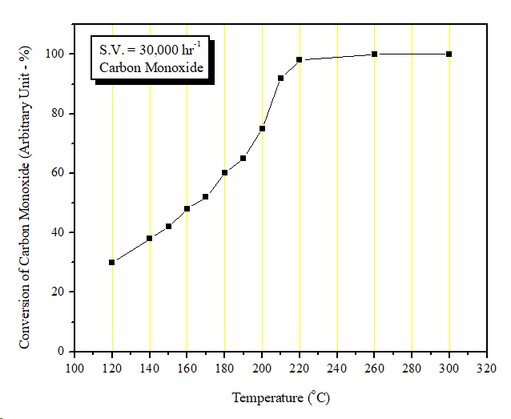
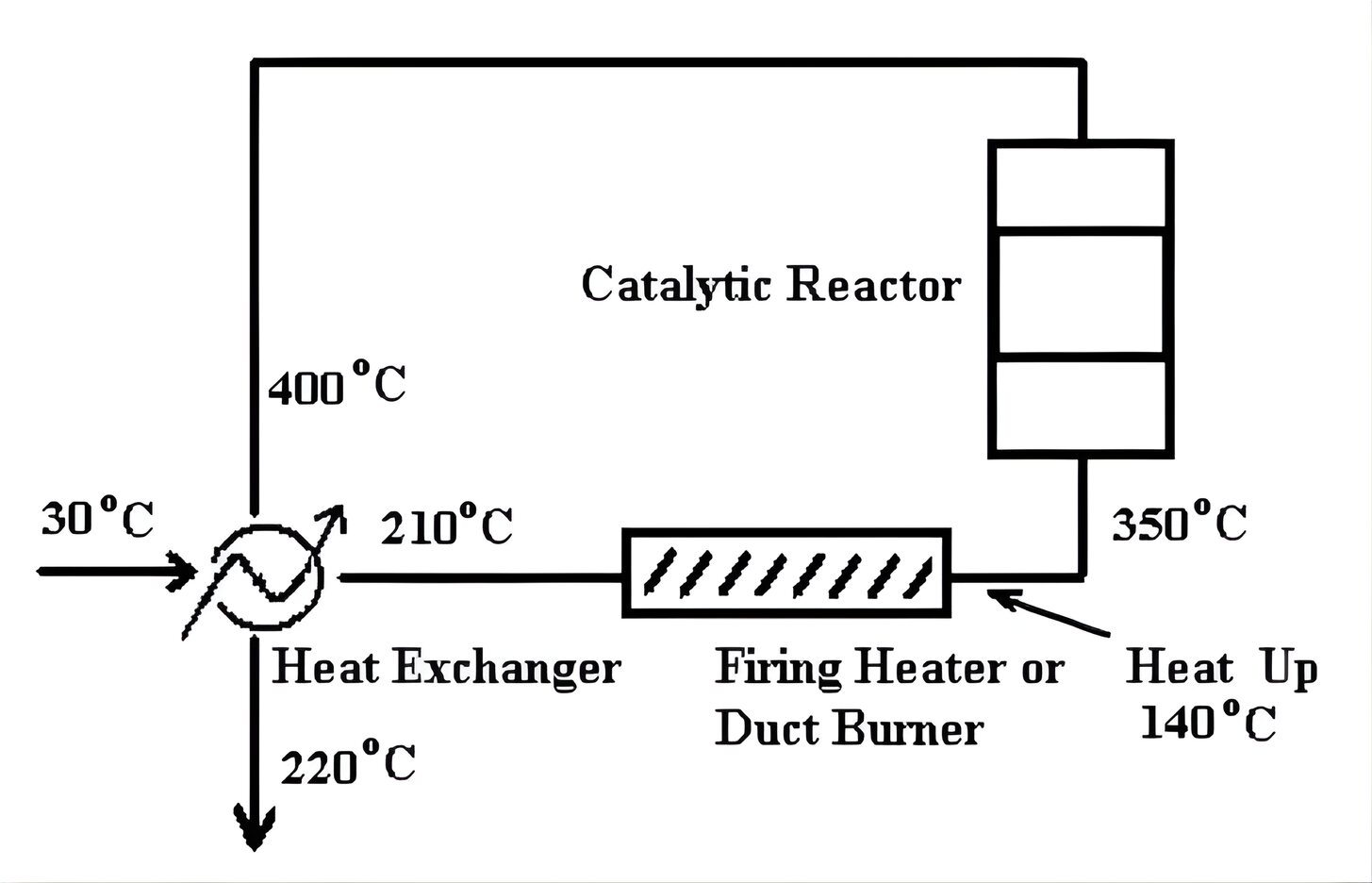
When waste gases containing CO and VOCs at a temperature of 220°C enter the Pro-CatOx system and come into contact with the Catalyst Surface, a Catalytic Oxidation reaction is triggered. This process effectively acts to break down the chemical bonds of the pollutants, causing them to react with oxygen. Consequently, the toxic molecular structures are completely transformed into clean air, achieving a high efficiency of up to 99%.
How It Works
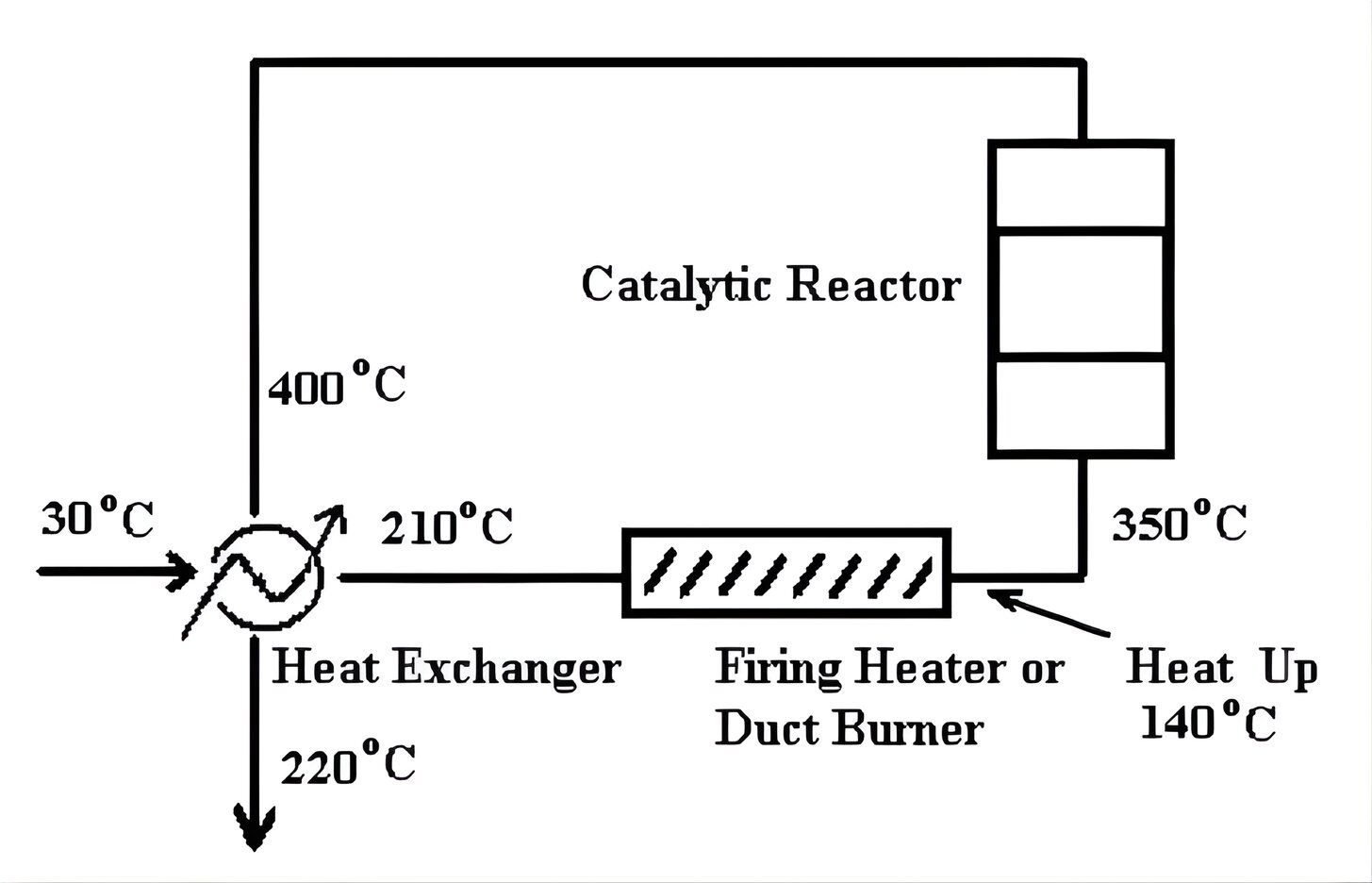
- Waste gas is drawn through a Heater to raise the temperature from ambient 30°C to the operating set point of 350°C.
- At the target temp, gas enters the Catalyst Reactor, reacting with the catalyst to completely convert toxic gases into Clean Air.
- This chemical reaction releases heat (Exothermic), causing the temperature of the treated clean air to rise significantly.
- This high-temp clean air passes through a Heat Exchanger to recover thermal energy for reuse before being discharged outside.
- Recovered heat from step 4 preheats incoming gas, reducing the heater's load and enabling Energy Savings of up to 50-60%.
Pro-CatOx Performance Guarantee
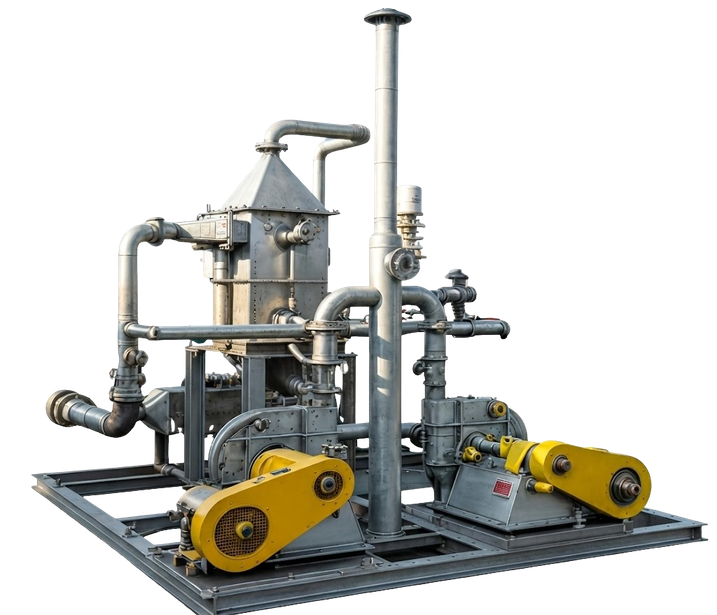
Pro-CatOx Reference
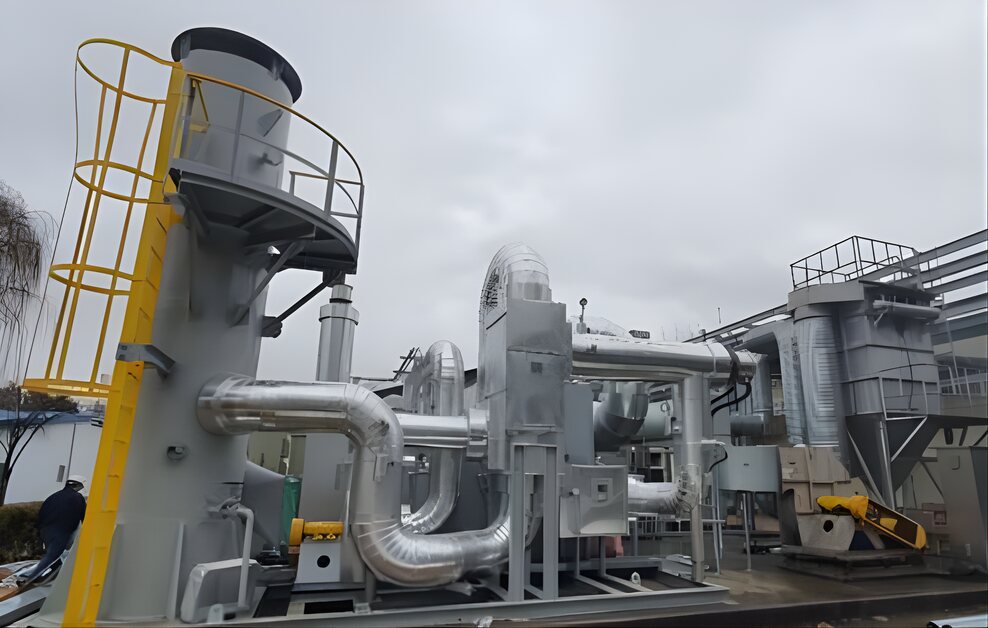
Daehwa Pharmaceuticals
Project : Concentrator + Catalytic Oxidizer
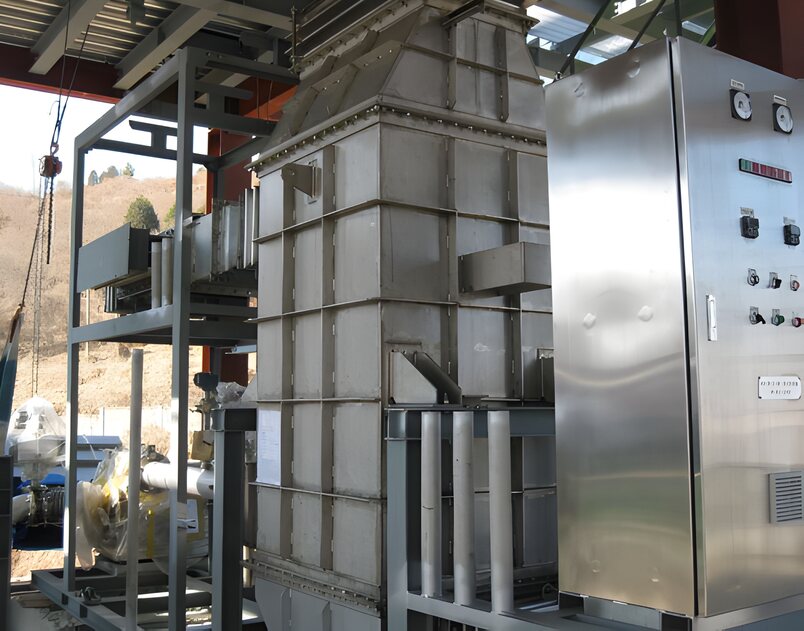
Hanwha
Project : CO Unit System
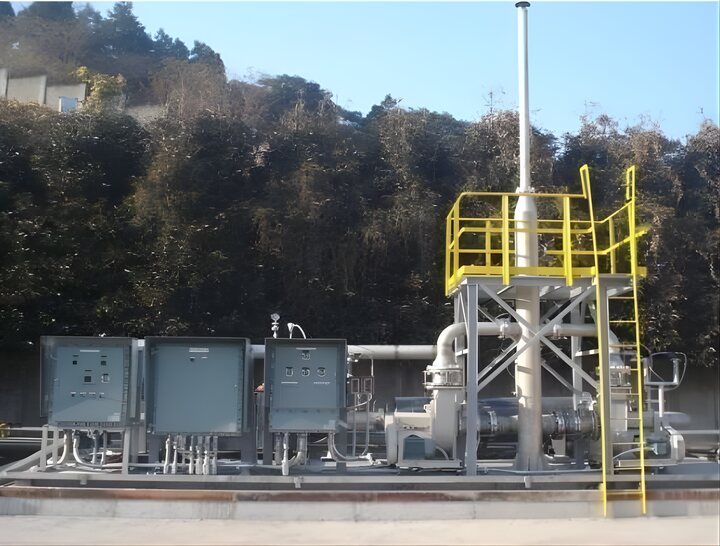
HUCHEMs
Project : VOC reduction catalyst and system
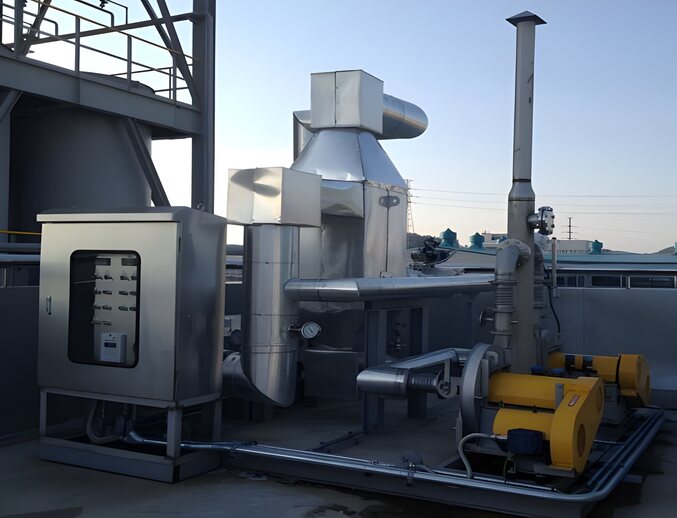
HUCHEMs
Project : CO reduction facility and catalyst
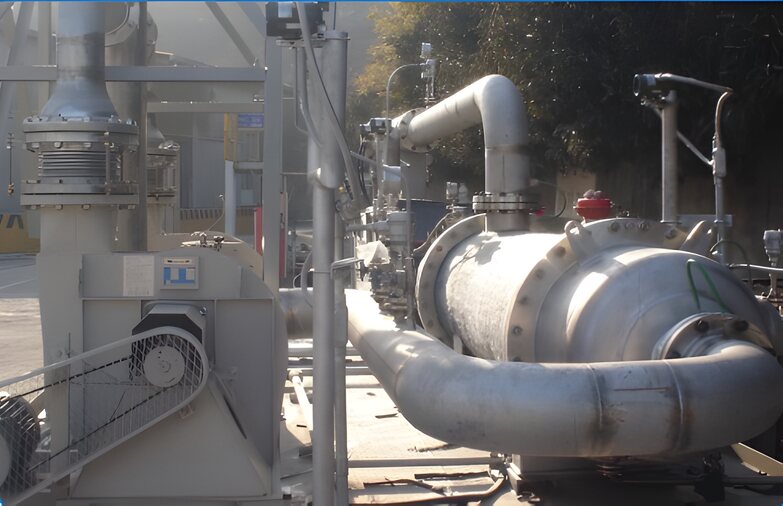
HUCHEMs
VOC reduction catalyst and Facilities
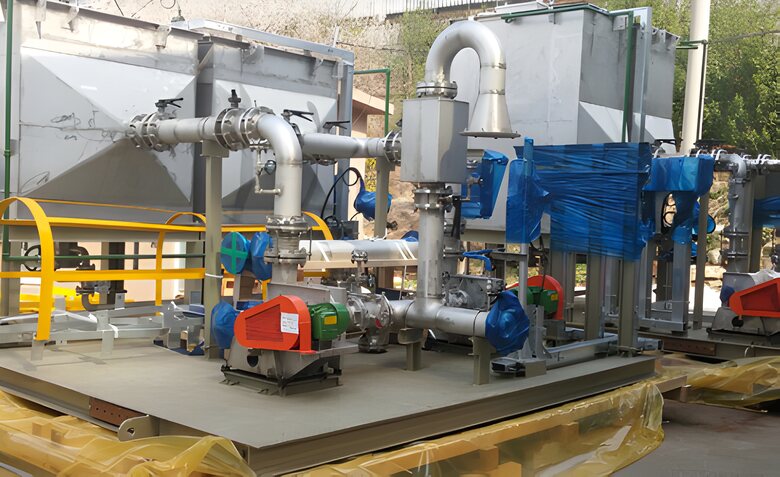
E engineering