NOx Control
Selective Catalytic Reduction (SCR)
SCR reduces the nitrogen oxides in flue gas by passing an ammonia-based reagent across a catalyst, which converts the NOx into nitrogen and water vapour before the gas is released to the atmosphere.
Get Advice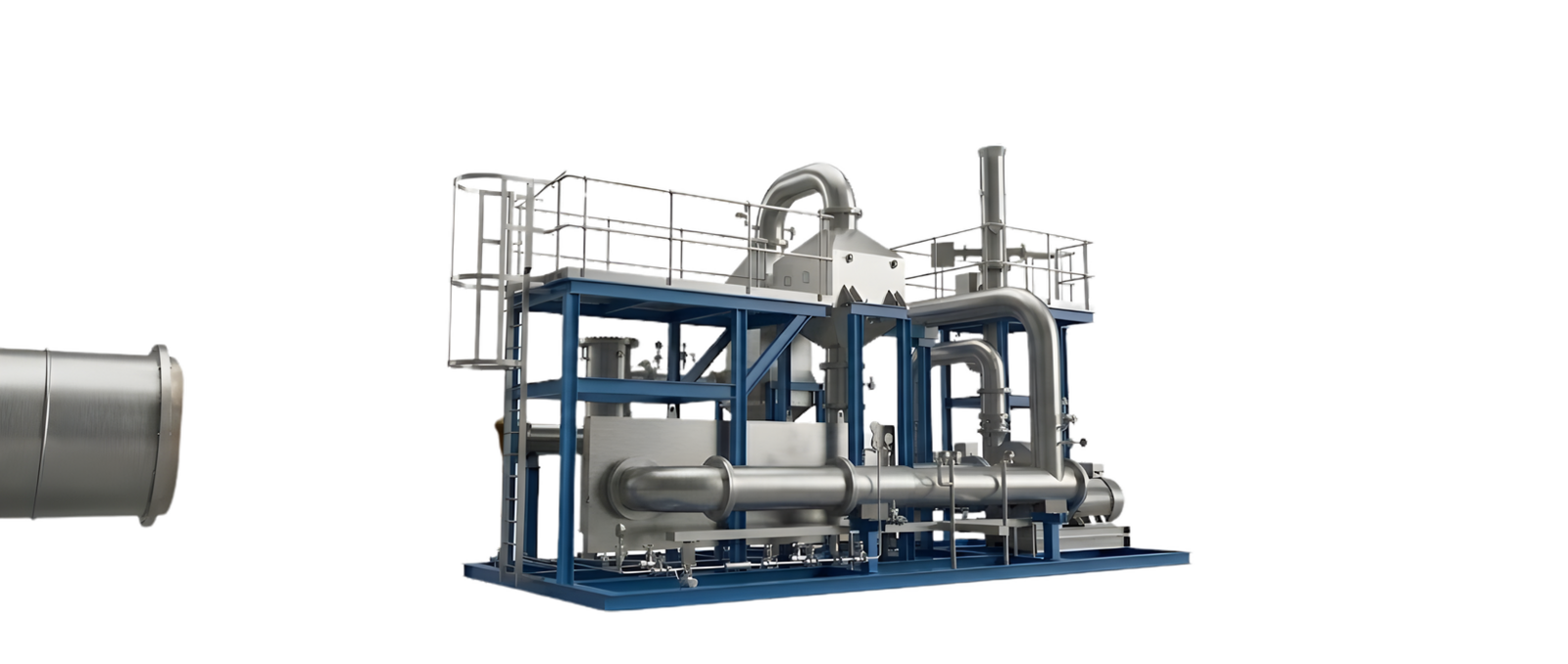
Principle of the SCR
How the reagent, the gas and the catalyst work on each other, stage by stage.
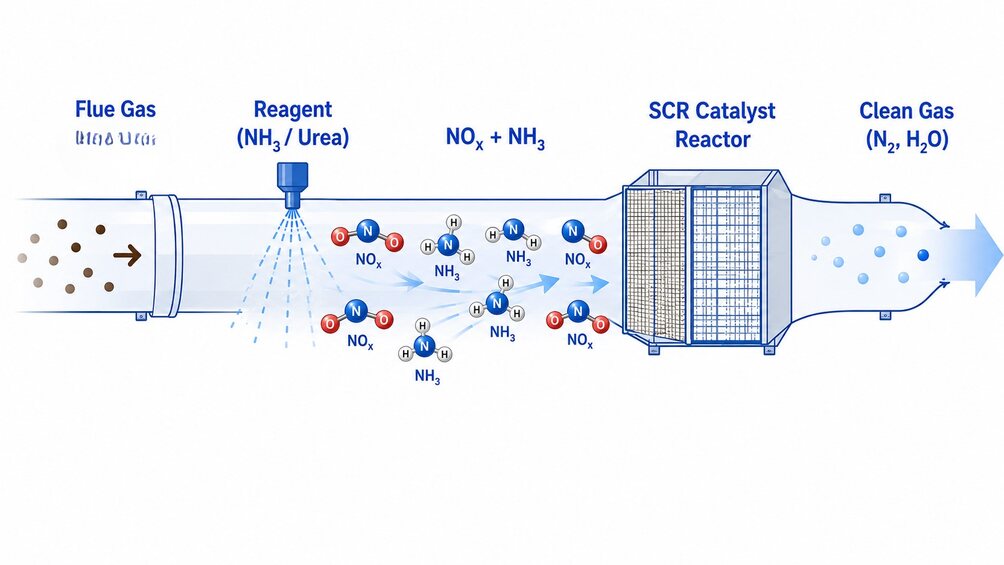
- Injection and mixing. Hot flue gas carrying NOx from the process is dosed with ammonia and mixed to an even blend before it reaches the treatment chamber.
- Catalyst contact. The mixed gas passes into the SCR catalyst block, which provides the surface where the gases meet and react.
- Surface reaction. Four things happen on the catalyst surface, set out below.
- Molecular transformation. The bonds in the harmful gas molecules are broken and their chemistry is changed completely. That is what produces clean air.
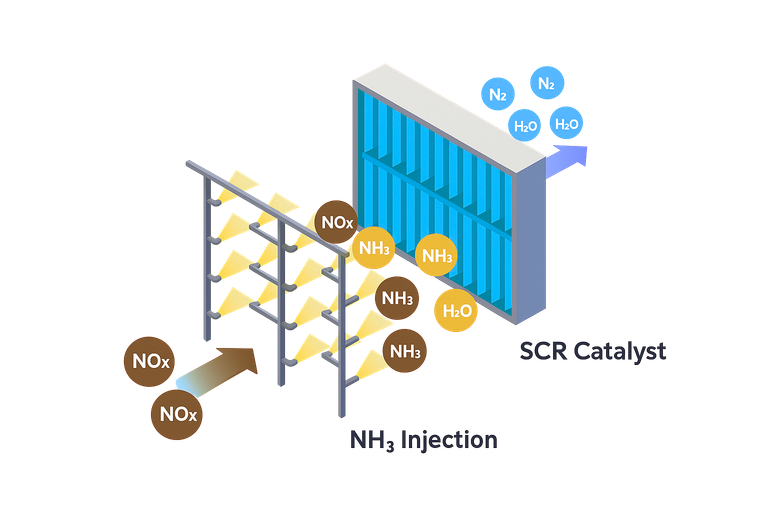
- Diffusion. NOx and ammonia molecules spread through the gas and work into the porous surface of the catalyst.
- Adsorption. Both are held at the active sites on that surface, ready to react.
- Reaction. A rapid chemical exchange takes place between the NOx and the ammonia.
- Desorption. The products, nitrogen and water, release from the surface and carry away, leaving the site free for the next volume of gas.
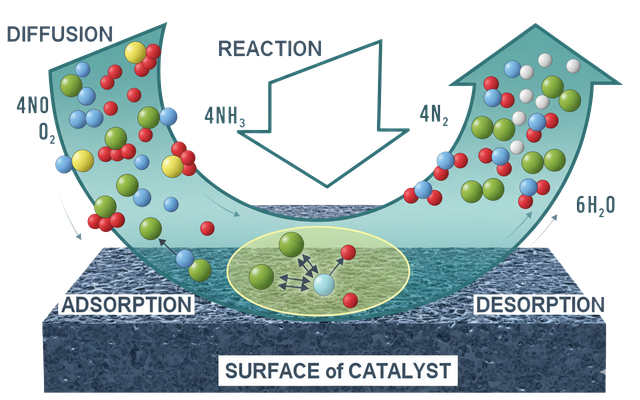
Surface Of Catalyst
4NO + 4NH₃ + O₂ → 4N₂ + 6H₂O
6NO + 4NH₃ → 5N₂ + 6H₂O
6NO₂ + 8NH₃ → 7N₂ + 12H₂O
2NO₂ + 4NH₃ + O₂ → 3N₂ + 6H₂O
Most of the nitrogen oxide abatement processes currently applied are selective catalytic reduction (SCR) processes that selectively reduce nitrogen oxides by using ammonia (NH3) or urea as reducing agent, and it is a process that has had many commercial achievements since it was first proposed. The main mechanisms of the entire process are as follows.
We has the best catalyst and technologies for SCR process
SCR Performance Guarantee
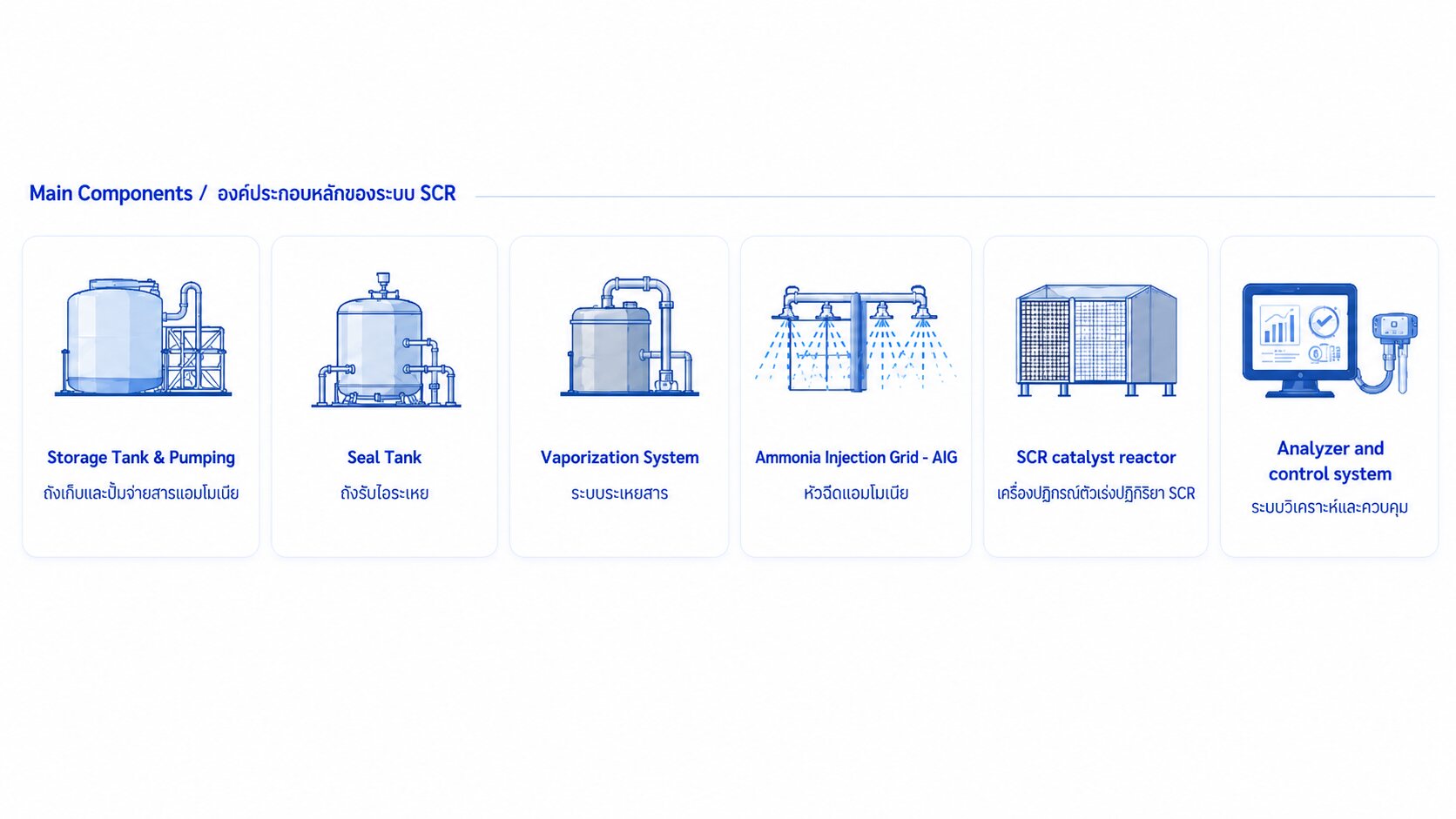
Main Components of the SCR System
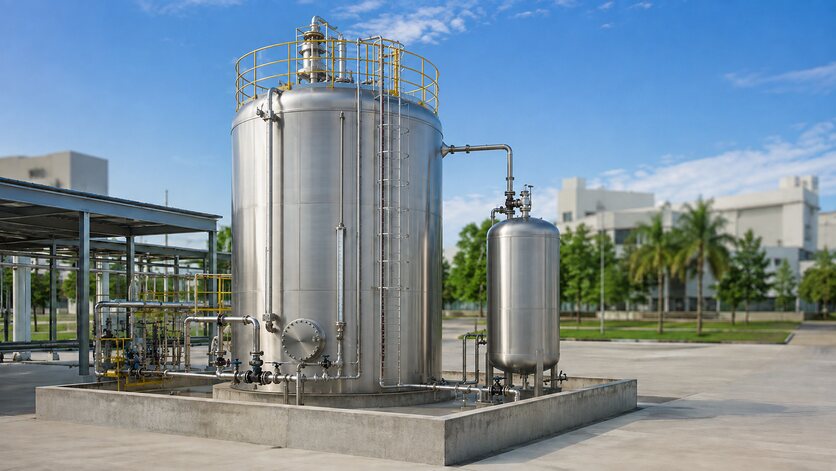
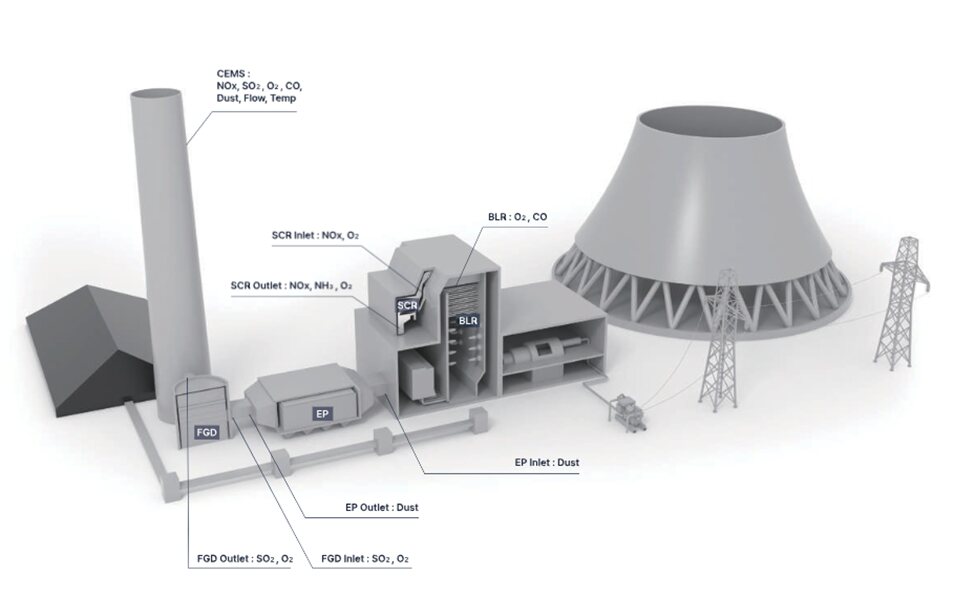
Integrated in Power Plant Flue Gas Treatment