
NOx Control
Selective Non-Catalytic Reduction (SNCR)
SNCR removes nitrogen oxides by injecting a reductant such as urea or ammonia straight into the combustion chamber, in a high temperature window of 850°C to 1,100°C, turning the harmful gas into pure nitrogen and water vapour.
Get Advice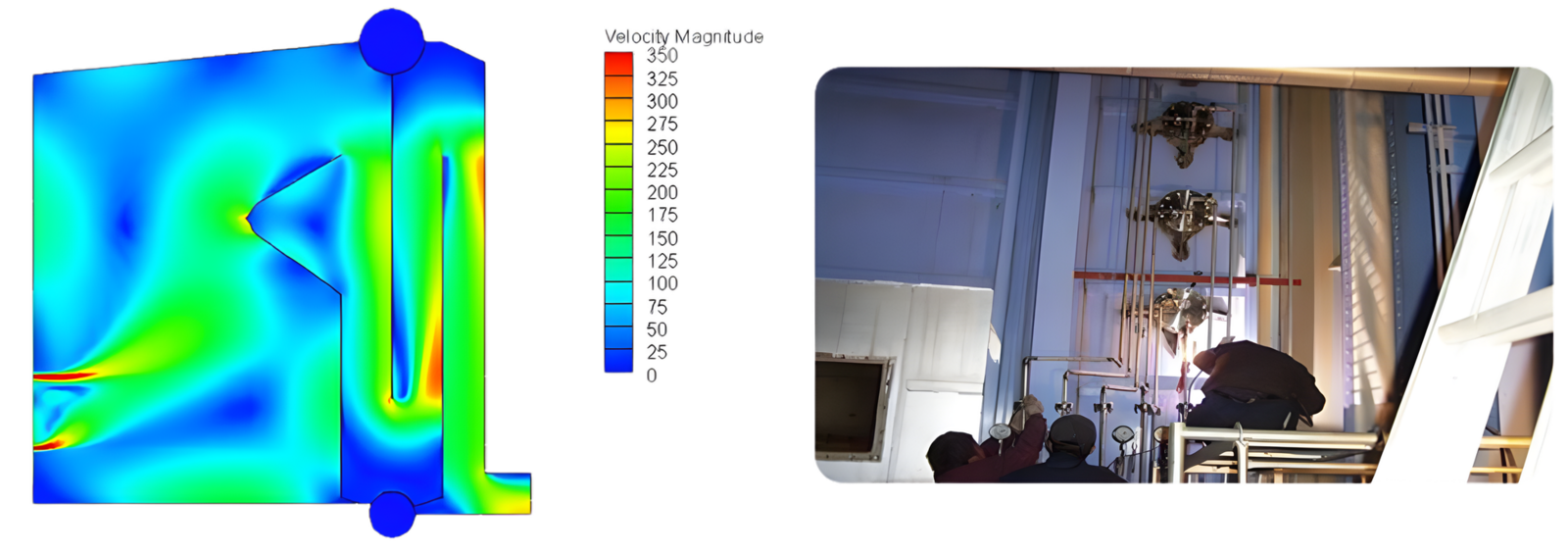
Precision is the whole system
Because SNCR uses no catalyst, precise control of the chemical injection is the heart of it. Where that precision is missing, removal efficiency drops, and an incomplete reaction can push the NOx level up rather than down.
This is why the injection points are settled by simulation before anything is installed, rather than adjusted on site afterwards.
Computational Fluid Dynamics