
CO, VOCs & Odor Control
Regenerative Catalytic Oxidizer (RCO)
Treating VOCs and CO with energy used efficiently. A catalyst lets the oxidation happen at a lower temperature than thermal destruction needs, which cuts both the energy used and the cost of running the system.
Get Advice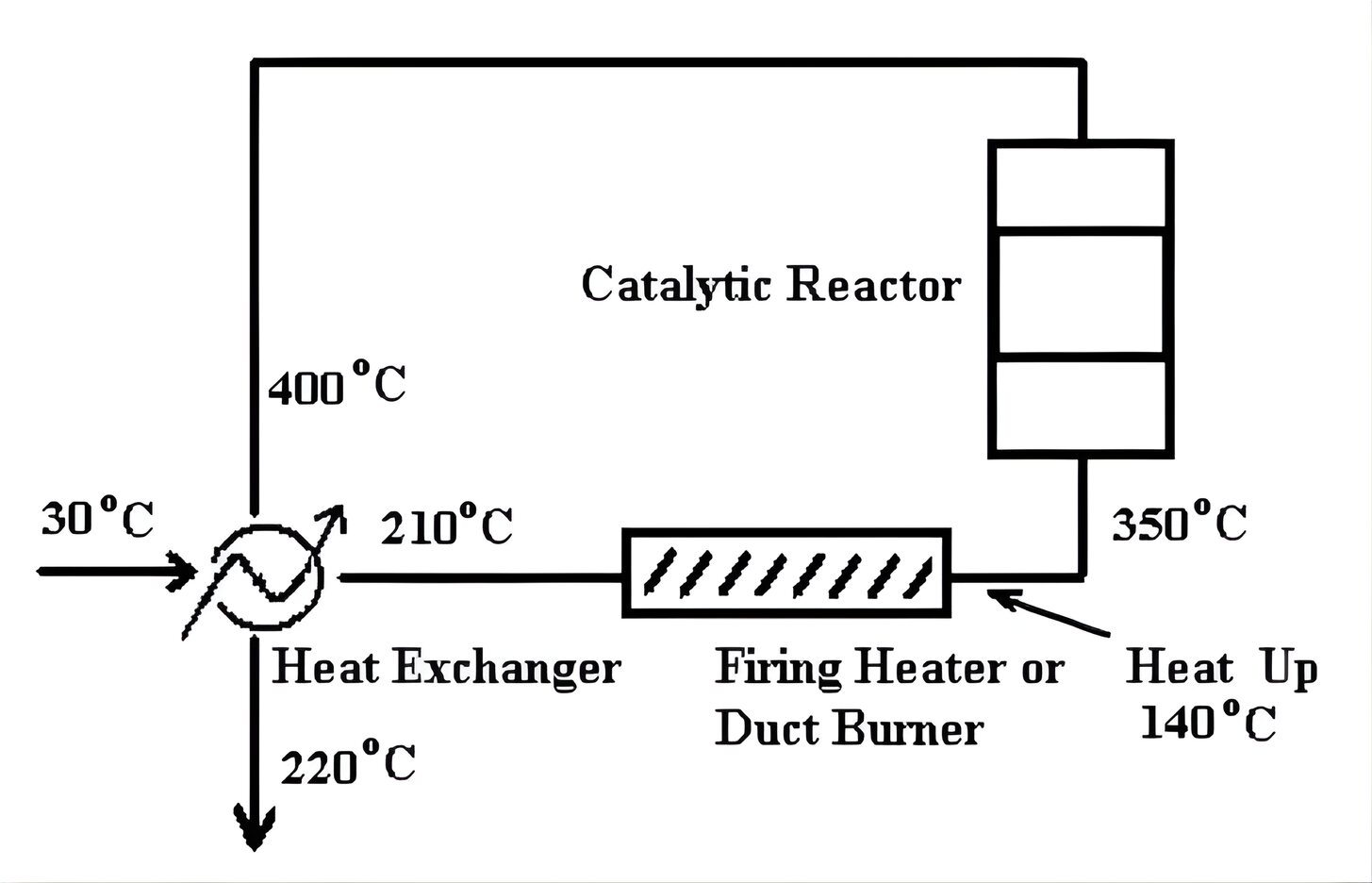
A Regenerative Catalytic Oxidizer, or RCO, is an air treatment system built to deal with volatile organic compounds (VOCs) and carbon monoxide (CO) from industrial processes. It combines catalytic oxidation with regenerative heat recovery.
What sets RCO apart is that suitable pollutants oxidise at a lower temperature than a conventional thermal oxidiser requires. That reduces energy use and running cost while still giving appropriate treatment efficiency, provided the system is designed around the actual gas and the actual process.
How RCO works
An RCO has two essential parts: the ceramic heat recovery media, which stores and transfers heat, and the catalyst layer, which drives the oxidation of VOCs and CO. The two work together so the system uses its energy well.
- Waste air enters the RCO. Air carrying VOCs, odor or CO is fed in through the flow control set and the direction-switching valves.
- The waste air is warmed through the ceramic heat recovery bed. The gas passes through ceramic media holding heat from the previous cycle, so its temperature is already raised before it reaches the catalyst.
- Oxidation happens at the catalyst layer. Once the gas is at the right temperature, the VOCs and CO react with oxygen on the catalyst surface and become carbon dioxide and water vapour.
VOCs + O₂ → CO₂ + H₂O - The treated air gives its heat back to the ceramic media. Hot clean gas passes through the ceramic bed on the other side, leaving its heat there for the next volume of waste air, and is then released through the stack.
- The system keeps switching direction. The valves reverse the flow cycle by cycle so each side of the ceramic media takes turns absorbing and giving back heat. That holds the temperature steady and reduces the supplementary fuel needed.
Advantages of an RCO
RCO suits a plant that needs to treat VOCs, CO or odor from its process and cares about both treatment performance and the long-run energy cost.
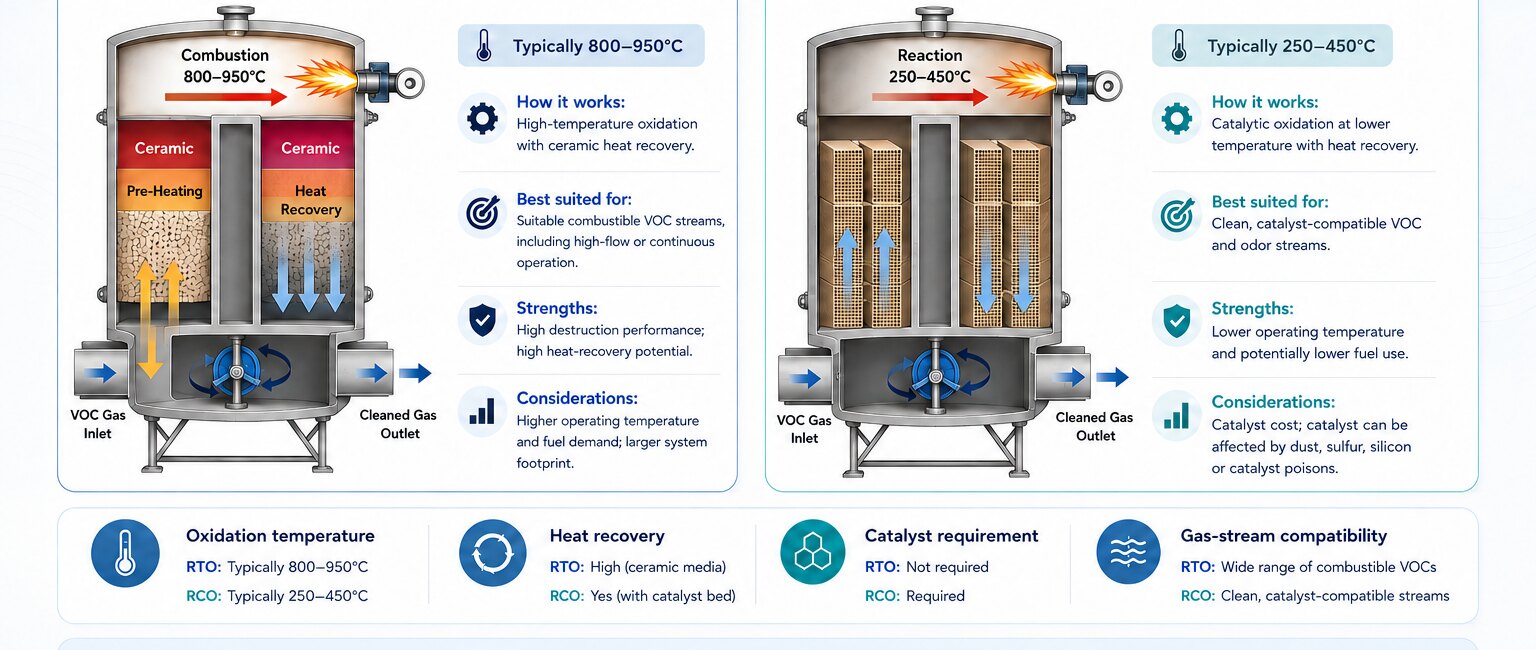
How RCO differs from RTO
Both recover heat through ceramic media. The difference that matters is that an RCO uses a catalyst so oxidation can happen at a lower temperature, while an RTO relies mainly on high heat to destroy the pollutants.
That makes RCO the better fit where energy use needs to come down and the gas will not degrade the catalyst quickly: no heavy dust, and nothing present that poisons the catalyst or coats its surface.
What to weigh up before choosing RCO
Designing an RCO should start from real process data:
- The flow rate of the waste air
- The type and concentration of the VOCs or CO
- The temperature and humidity of the gas
- How much dust, oil mist or sticky matter it carries
- Anything that may poison the catalyst, such as silicone, sulphur, phosphorus, chlorine or certain metals
- Safety around the concentration of flammable substances, and control of the LEL
RTO and RCO are not only pollution control equipment. They are a way for a plant to control its air quality properly while reducing the energy burden over the long term. Designed correctly, they are a sound choice for any industry that needs to deal with VOCs, CO and odor at the source.
Prolific will advise on the choice, analyse the character of your gas, and design a treatment system around your process, so that what you end up with is safe, effective and matched to the job it actually has to do.